Democrats Want to Expand New Spy Powers That Trump Could Use
This week could see the radical expansion of government surveillance that would be ripe for abuse by a future authoritarian leader. The twist? It’s Joe Biden and the Democratic establishment who want to pass it.
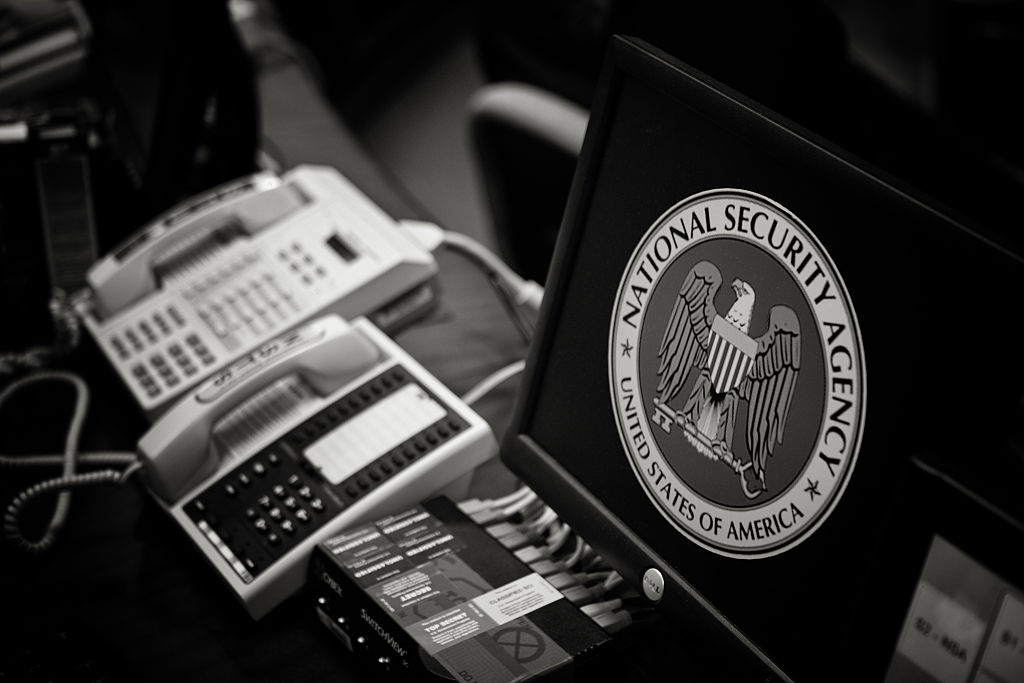
The US government is poised to radically expand its power to spy on its own people — all while the politicians voting to push it through accuse each other of being dangerous authoritarians bent on turning government power on their political opponents.(Brooks Kraft LLC / Corbis via Getty Images)
With election insanity ramping up, a war in Eastern Europe, a genocide in the Middle East, and the very real possibility of another dumb US war in the region, you’d be forgiven for completely missing the fact that the US government is poised to radically expand its power to spy on its own people — all while the politicians voting to push it through accuse each other of being dangerous authoritarians bent on turning the power of the federal government on their political opponents.
The measure in question, which could be voted into law as early as Wednesday, has been described variously by privacy advocates, lawmakers, and even former Department of Justice lawyers across the political spectrum as “dramatic and terrifying,” a “Trojan Horse for PATRIOT Act 2.0,” edging the United States toward a “Chinese-style Panopticon,” and “Stasi-like,” referring to the feared East German secret police notorious for eavesdropping and collecting information on the most intimate details of ordinary people’s lives. That last descriptor, says NSA whistleblower Edward Snowden, is “not only a fair characterization . . . it’s probably generous.”
What’s causing this alarm is a provision buried in the bill that’s meant to reauthorize the Federal Intelligence Surveillance Act (FISA) spying program for another two years, specifically the Section 702 power that allows the National Security Agency (NSA) to “incidentally” hoover up and peek at Americans’ private communications in the course of spying on foreigners — a bill that’s been at the center of a week’s worth of intense political to-ing and fro-ing. As usual when it comes to radical expansions of US government surveillance, the issue boils down to an almost imperceptible change in the wording of a bill, which in practice will have vast implications for ordinary Americans’ privacy.