From Cartel to Table
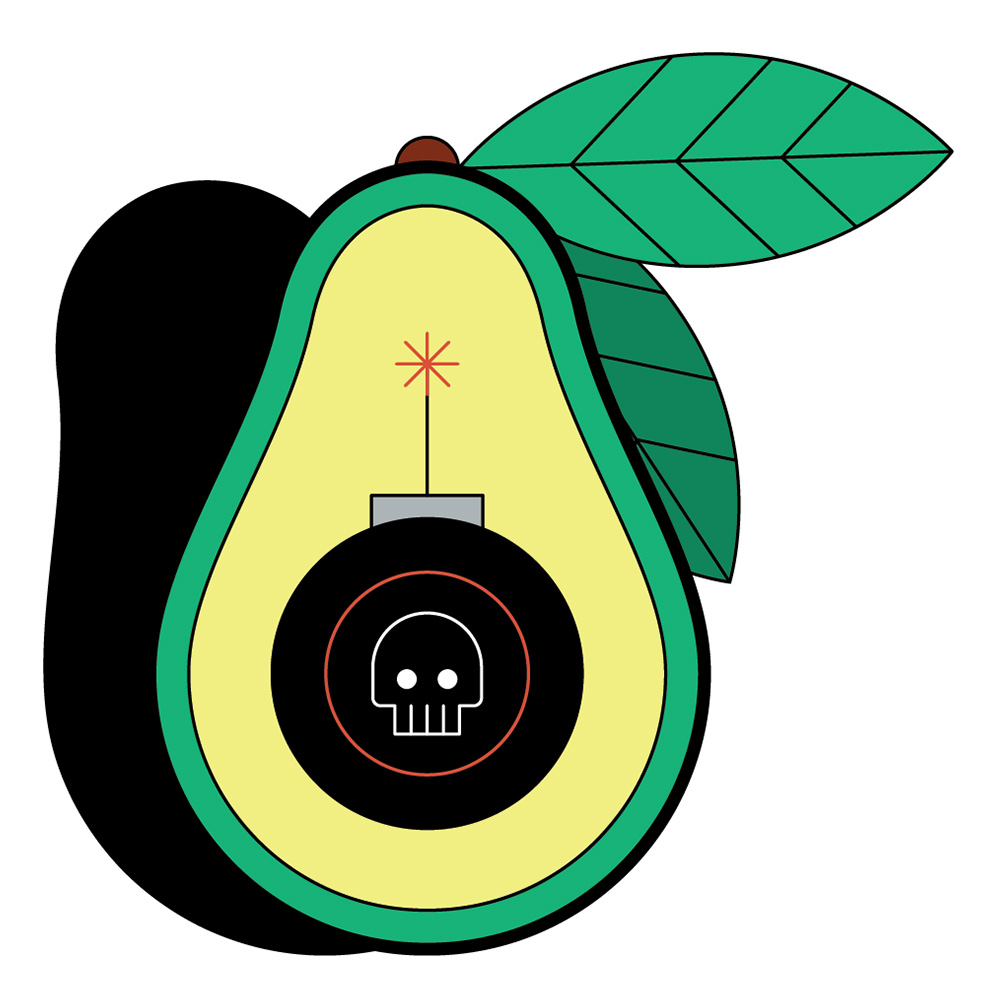
Illustration by Marco Miccichè.
Mexico is the largest exporter of avocados in the world, to the tune of $3.2 billion in 2020. The state of Michoacán is at the center of this “green gold rush,” producing 80% of all Mexican avocados annually. Michoacán is also one of the most violent states in Mexico, largely because of organized crime. As the Mexican war on drugs continues, former traffickers are looking to diversify their assets in both licit and illicit industries. Now, in the Michoacán city of Uruapan, at least four cartels — Jalisco Nueva Generación Cartel, La Nueva Familia Michoacana Cartel, Tepalcatepec Cartel, and Zicuirán Nueva Generación Cartel — vie for access to avocado producers, whom they blackmail and extort for rent and “protection fees.”
Avocados are serious business: in a 2019 turf dispute over groves, members of Jalisco Nueva Generación Cartel massacred 19 members of La Nueva Familia Michoacana and hung their bodies from a bridge in Uruapan. In February 2022, the United States briefly paused imports of Mexican avocados after a USDA inspector questioning the integrity of a shipment received a threatening phone call from a cartel. It wasn’t the first time it had happened.
American consumption of avocados has risen steadily since 1994, when NAFTA lifted an 83-year ban on the import of avocados from Mexico, intended to prevent potential seed weevil infestation.