US Interference in Somalia Has Been a Disaster for Somalis
Joe Biden has announced the return of US ground troops to Somalia. Far from helping Somalis, the long, destructive history of US intervention since the 1970s has merely worsened their country’s deep crisis and fueled the rise of the terrorist group al-Shabaab.
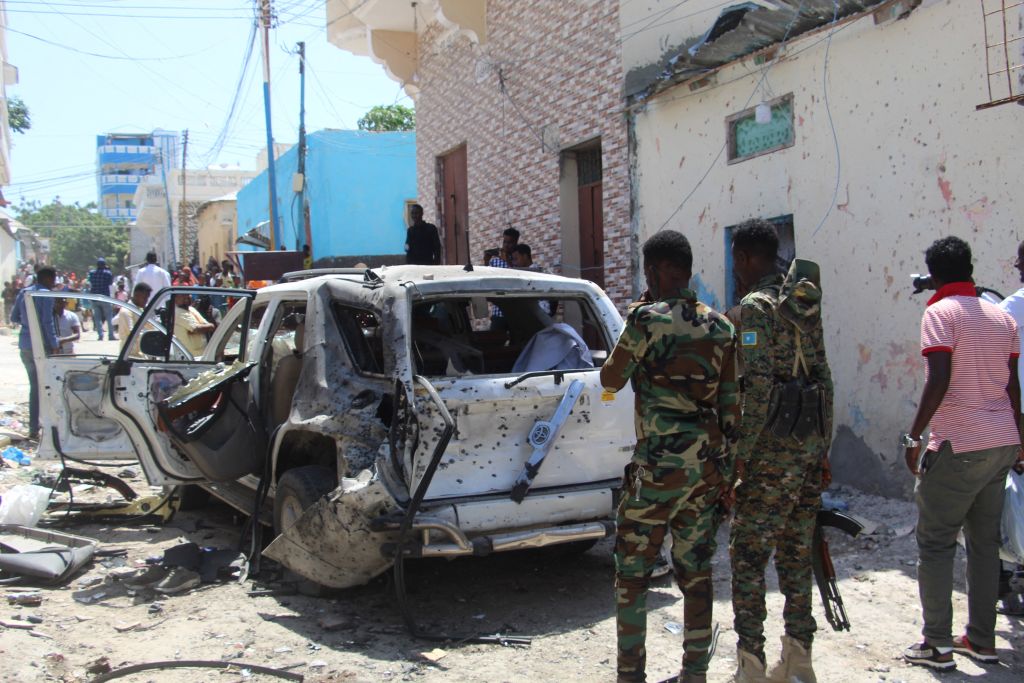
Government soldiers look at the scene of a suicide bomb attack in Mogadishu, Somalia, on January 16, 2022. (AFP via Getty Images)
For the past three decades, Somalia has not had a functioning government capable of administering its national territory. The country’s troubled modern history has led foreign-policy analysts in the West to depict it as the archetype of a “failed state.” Since an abortive US military mission to Somalia in the early 1990s, it has most often featured on the Anglophone news agenda as a haven for terrorist attacks in neighboring countries or the source of piratical raids on international shipping routes.
Much of this coverage gives readers the impression that Somalia’s problems are self-generated and that the rest of the world has been trying to save it. In reality, there is a protracted history of outside interference in Somali affairs that has worsened its long crisis. From the Cold War to the “war on terror,” the United States has used Somalia as a battleground for its geopolitical schemes, with profoundly destructive consequences for Somalis.
From Independence to Siad Barre’s Rule
A union of British and Italian colonies that were joined at independence in 1960, Somalia is strategically located on the Horn of Africa, which oversees Middle Eastern natural gas and oil routes. Although most of the country’s inhabitants are ethnic Somalis who share a language, culture, and religion, they have been divided by clan rivalry. Ethnic minorities have suffered from political, economic, and social discrimination.