Latin America’s Second Wave of Left-Wing Governments Could Be More Powerful Than the First
A few years ago, commentators were announcing the demise of the Latin American left. But if Lula wins this autumn’s presidential election in Brazil, the Left will be governing the region’s six largest economies for the first time.
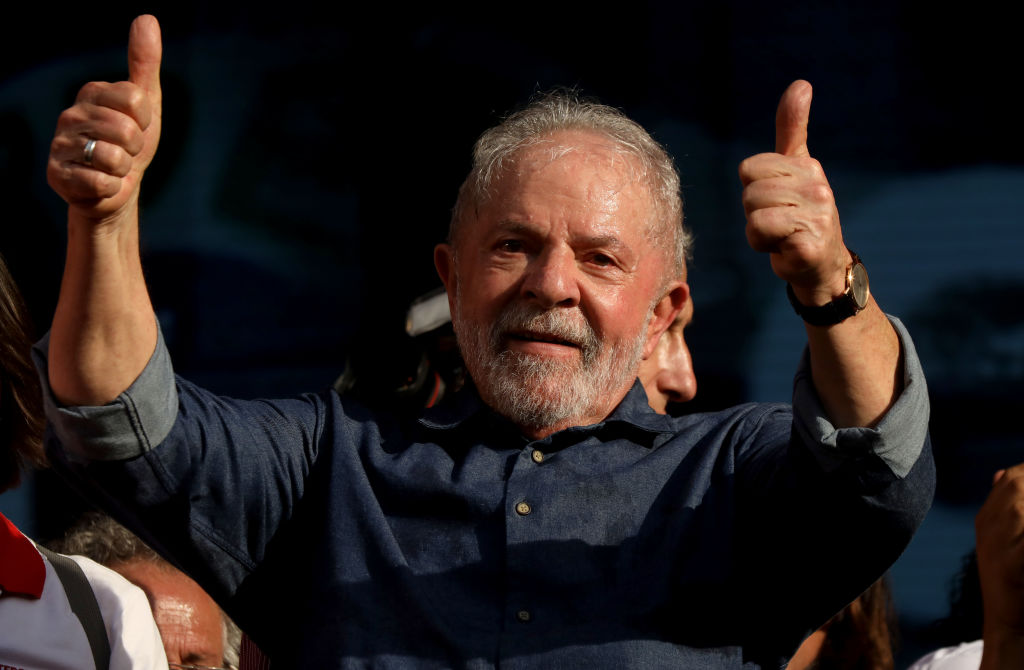
Former president of Brazil Luiz Inácio Lula da Silva gestures during a Labor Day demonstration on May 1, 2022, in São Paulo, Brazil. (Rodrigo Paiva / Getty Images)
Until recently, Latin American commentators were widely reporting on the inevitable “ebbing” of the pink tide. By the mid-2010s, the commodity boom that began in the early 2000s had rapidly gone into decline. The Right had grasped the opportunity to destabilize its opponents through campaigns of sabotage, propaganda, and scandal, and left-wing governments were facing crises on all fronts.
Whether through elections (Argentina), “parliamentary coup” (Brazil), “silent coup” (Ecuador), or outright military coup (Bolivia), by the second half of the last decade, the left turn seemed to be giving way to the rise of a new right in the region. For their part, social movements appeared to be in a state of fatigue or, even worse, direct confrontation with left governments, and initially lacked the energy or will to defend them against the right-wing assault.