Honduras’s First Woman President Is a Socialist With a Vision
Honduras inaugurated socialist Xiomara Castro as president last week, ending the nightmare of the 2009 US-backed coup in the country. The challenges she faces are immense, but her presidency could be a key piece of a new left-wing surge throughout Latin America.
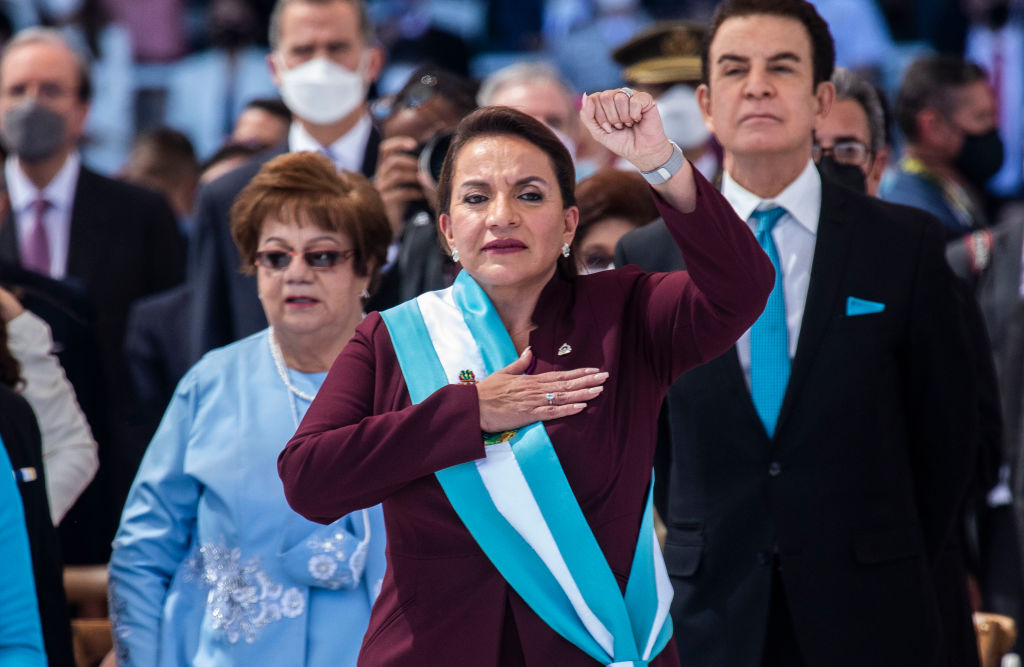
Xiomara Castro is inaugurated as president of Honduras in Tegucigalpa on January 27, 2022. (Inti Oncon / Picture Alliance via Getty Images)
It’s a historic new era for Honduras, where the people managed to defeat Juan Orlando Hernández’s narco state and elect Xiomara Castro, the country’s first-ever woman president, and a progressive to boot. As presidential candidate of the left-leaning Libre Party, Xiomara Castro won a landslide victory and was inaugurated on January 27 in a ceremony at the National Stadium, attended by thousands of enthusiastic supporters.
Turning the traditional Spanish activist slogan from “Sí se puede” (Yes we can) to “Sí se pudo” (Yes we did), Hondurans inside and outside the stadium heaved a sigh of relief that the twelve-year nightmare of the National Party’s rule had come to an end. The transition from the 2009 coup — in which Castro’s husband, former president Manuel Zelaya, was ousted from the presidential palace and spirited out of the country in his pajamas — to Xiomara Castro donning the turquoise and white presidential sash in the presence of her husband was, as the master of ceremonies declared, a historic “return of legality.”
For a tiny Central American country of less than 10 million people, Castro’s inauguration was an international event, with attendees including US vice president Kamala Harris, the King of Spain Felipe VI, and Argentina’s popular vice president, Cristina Fernández de Kirchner. Throughout the continent, the Latin American left celebrated her victory as giving momentum to the “second pink tide” of progressive governments sweeping the region, a tide that will soon include Gabriel Boric in Chile and, hopefully later this year, Brazil’s Luiz Inácio Lula da Silva and Colombia’s Gustavo Petro.