Italy’s Recovery Plan Shows Why Public Spending Isn’t Always “Left-Wing”
Former European Central Bank chief Mario Draghi’s government has been widely hailed for using EU funds to invest Italy’s way out of crisis. Yet while the plan promises big spending, it’s mainly a transfer of public resources to private business.
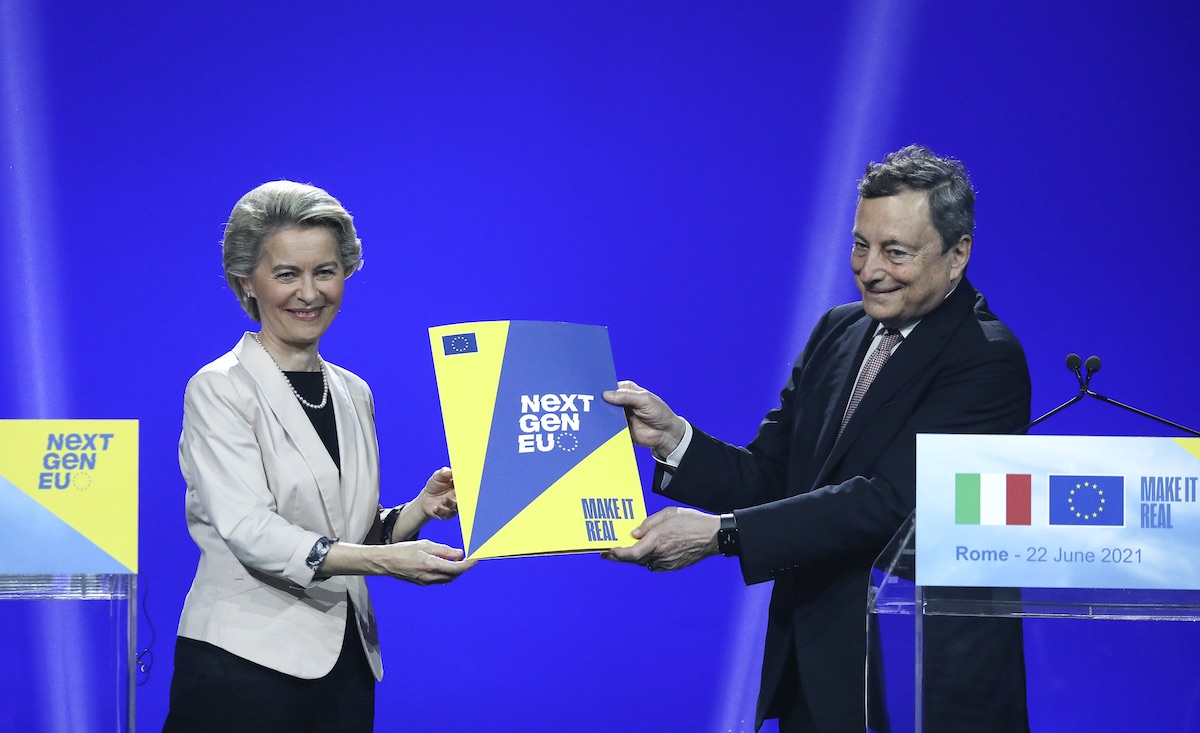
Italian prime minister Mario Draghi receives the Next Generation EU recovery plan from Ursula von der Leyen, president of the European Commission, during a news conference in June 2021. (Alessia Pierdomenico / Bloomberg via Getty Images)
Last month, the Economist picked Italy as its “country of the year” — an award given “not to the biggest, the richest or the happiest” country, but the one that “improved the most in 2021.” The liberal organ’s praise was not aimed at Italy’s victory in the European football championships or its record haul of Olympic medals, but squarely at prime minister Mario Draghi’s so-called government of the best.
The former European Central Bank chief’s administration unites the main parties from the soft left to the hard right. But for all the talk of national unity behind “Super Mario,” 2021 in Italy ended with a general strike, called by the country’s CGIL and UIL union federations. On December 16, workers walked out across Italy to protest the Draghi government’s budget package. A mobilization on this scale had not been seen since seven years earlier, when workers rallied against Matteo Renzi’s Jobs Act.
All the forces that back Draghi’s administration, including parties that call themselves center left, criticized the strike, claiming that the unions were unfairly trying to threaten a country that was recovering from a crisis.