The Pandemic Has Given Us the Opportunity to Transform Europe
In response to COVID-19, EU member states have agreed to policies that once seemed inconceivable. The EU recovery fund falls well short of what’s needed, but there’s now an opening for the European left to demand more radical forms of economic redistribution.
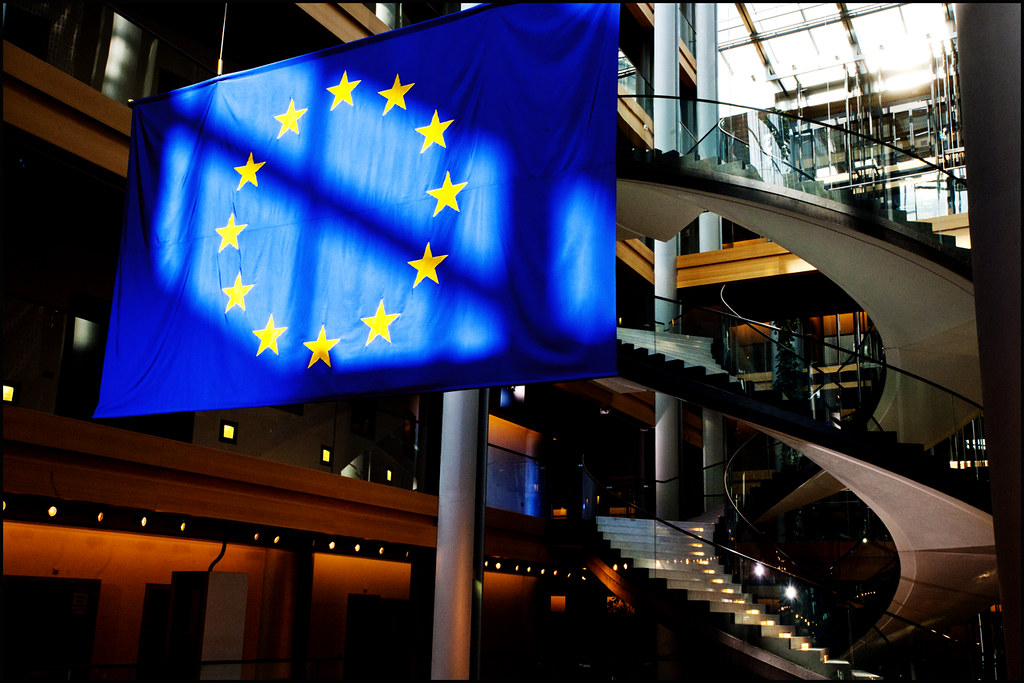
The European Union flag in the European Parliament in Strasbourg, France. (European Union 2013 — European Parliament / Flickr)
Since the beginning of the COVID-19 pandemic, the European Union (EU) and its member states have taken some unprecedented steps to manage the public health crisis and its economic fallout. Although those steps came in response to a global emergency, they have profound long-term implications for economic policy in the EU.
The Left now has a real opportunity to argue for reforms at a pan-European level that will make it easier to advance our agenda. But first we need to make sense of what has been happening over the last eighteen months and place it in the longer historical context of economic policymaking within the EU.
The Fire Last Time
The crisis that followed the 2008 crash opened a debate about economic policy and institutional development in the eurozone and the EU more broadly. A broad consensus emerged among commentators, including those on the Left, that the EU faced a choice between moving forward with further “integration” (i.e., new fiscal powers and policies at the federal level of government) or backward, with some kind of return to national currencies.