Barbados Has Rid Itself of the Queen But Not Neocolonialism
Barbados’s decision to become a republic happily brings to an end its centuries-long formal subjection to the British Empire. But as the country has already discovered in its dealings with the IMF and World Bank, not all forms of colonialism are so easily rebuffed.
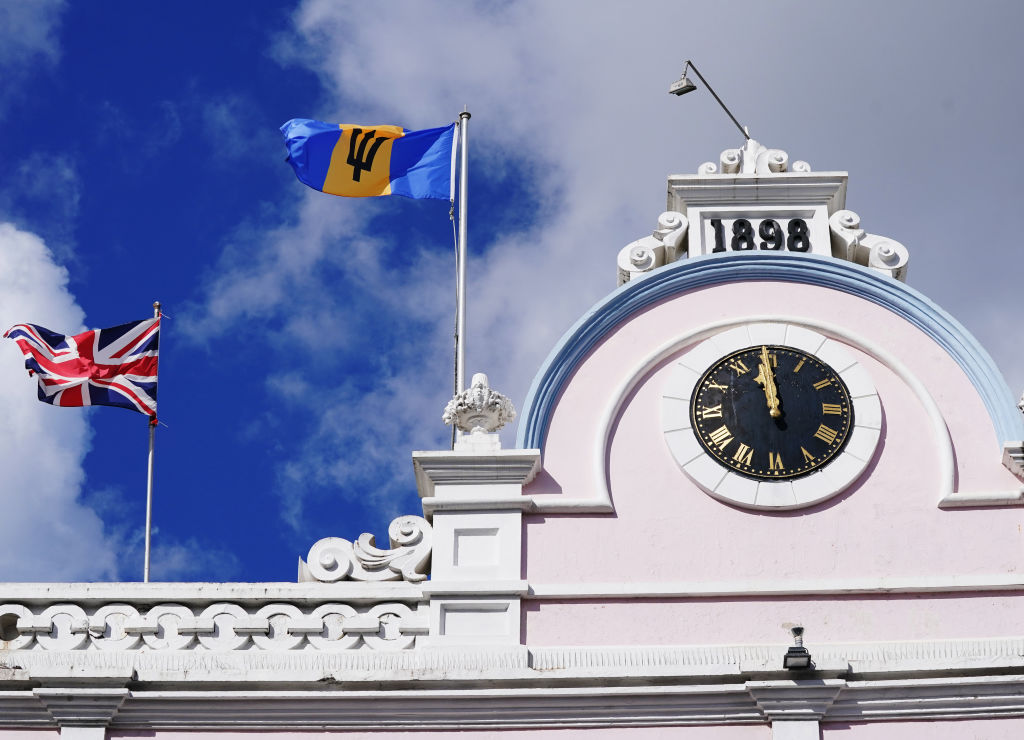
On November 29, Barbados officially became a republic. (Jonathan Brady / PA Images via Getty Images)
It’s easy to forget, now that the sun is almost all the way set on the British empire, but the tentacles of the country’s royal family continue to slither over its former colonies. Twenty-nine years ago was the last time one of them, Mauritius, brushed off the residue of imperial control and became a republic, making its new president its head of state, instead of the British Queen. This week, Barbados finally did so too.
Barbados hasn’t won independence; that already happened in 1966. That victory had been the culmination of a series of political reforms that granted the island self-governance by the start of the decade, won by many years worth of labor rebellions and mass struggle shaped by the ideas of socialists and black nationalists, and mirrored by similar struggles happening across the Caribbean at the time. Even so, like many former British colonies, in the intervening decades Barbados kept the symbolic trappings of monarchy, never fully cutting the cord.
But the option had always been on the table. A 1979 constitutional commission, pointing in part to “the measure of support evinced at public meetings for the retention” of the monarchy, recommended that the Queen stay in her position as head of state. Practically, this didn’t mean much. Most visibly, it meant the continued existence of the governor-general, the Queen’s official representative, and a key role in the somewhat absurd constitutional Kabuki theater familiar to those former British colonies that have never gone all the way and become republics.