Britain’s Imperial Heyday Is Nothing to Be Nostalgic For
The British Empire should be a fading memory. But modern-day conservatives have turned imperial nostalgia into a powerful weapon in the country’s culture wars, vilifying those who want a more honest reckoning with Britain’s historic crimes.
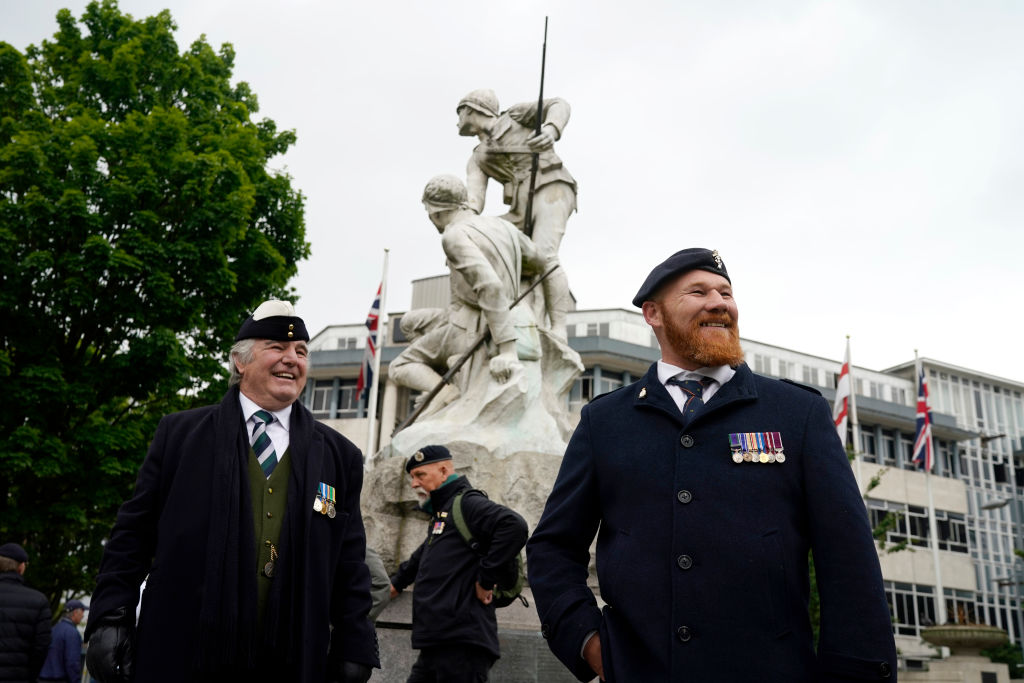
A group of “patriots” gathers to guard a cenotaph ahead of a Black Lives Matter protest on June 10, 2020, in Hull, United Kingdom. (Christopher Furlong / Getty Images)
On June 13 this year, GB News aired for the first time on British television. The presenter of the channel’s first broadcast was former BBC anchor Andrew Neil. Several of Neil’s interviews with politicians and public figures have gone viral in the past, with liberals and conservatives alike lauding the avowed Thatcherite and former editor of the Sunday Times as a paragon of journalistic integrity. A pliant political and media class has rarely interrogated his ongoing chairmanship of the Spectator magazine, one of the most hospitable outlets for far-right ideas in the UK.
The new channel’s backers envisaged GB News tapping into a demographic they saw as underserved by a liberal drift on the part of publicly funded media, especially the BBC. They positioned GB News as the UK’s first avowedly “anti-woke” television channel, a direct response to social justice movements — in particular, Black Lives Matter (BLM), the struggle for trans rights, and feminism.
The launch came just over a year after there were protests throughout Britain in solidarity with the global BLM movement in the wake of George Floyd’s murder. After the toppling of the statue of slave trader Edward Colston in Bristol, a long-standing cause of resentment and disgust for many Bristolians, a series of counterprotests met BLM demonstrators in towns across the country.