Haitians, not Americans, Should Decide Haiti’s Future
From a decades-long US occupation to violent foreign-backed coups, Haiti’s history is riddled with disastrous imperial interventions that have helped keep the country mired in poverty. There’s zero justification for more American interference in the country.
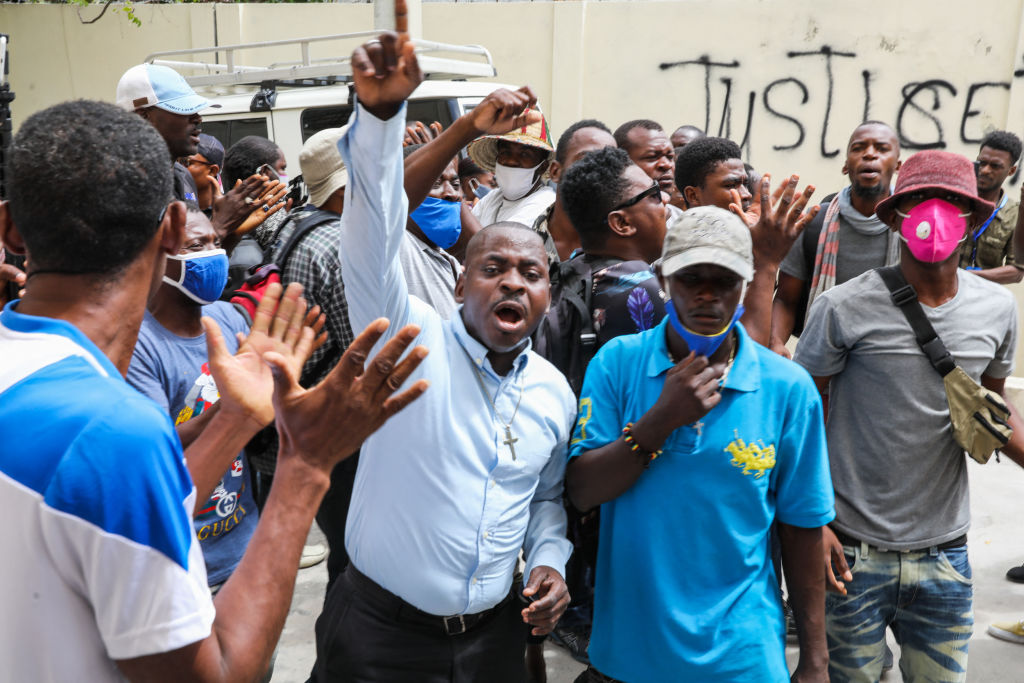
Supporters of Haitian president Jovenel Moise protest outside a court in Port-au-Prince during a hearing in the wake of his assassination. (Valerie Baeriswyl / AFP via Getty Images)
In the days following the recent assassination of Haitian president Jovenel Moïse, the country’s acting prime minister asked for military support from both the United States and the United Nations. While the requests were couched in terms of protecting Haiti’s infrastructure in the lead-up to new elections, critics warn that the vast majority of Haitians would oppose foreign military intervention — especially by the United States. Fears abound that any intervention would first and foremost target the growing, openly revolutionary movement in Haiti’s shanty towns.
Haitian history is riddled with foreign interventions that have kept the country mired in poverty and authoritarianism. At the turn of the nineteenth century, Haitians liberated themselves from France, ending both colonialism and slavery in Haiti. While the Haitian Revolution remains the only successful revolution led by enslaved people in world history, Haitians paid dearly for challenging the status quo.
France threatened to invade until 1825, when Haiti agreed to pay the equivalent of $21 billion in indemnity, which included the “cost” of enslaved people freed during the revolution. Fearing the spread of similar uprisings to its own shores, the United States also refused to recognize the Haitian state until the US Civil War.