Emmanuel Macron’s Africa Policies Are Still Rooted in French Colonialism
Today’s Africa-France summit is a typical show of French president Emmanuel Macron’s imperial grandstanding. But it wouldn’t be possible without business leaders and intellectuals who paint France’s interference in its old colonies in a humanitarian light.
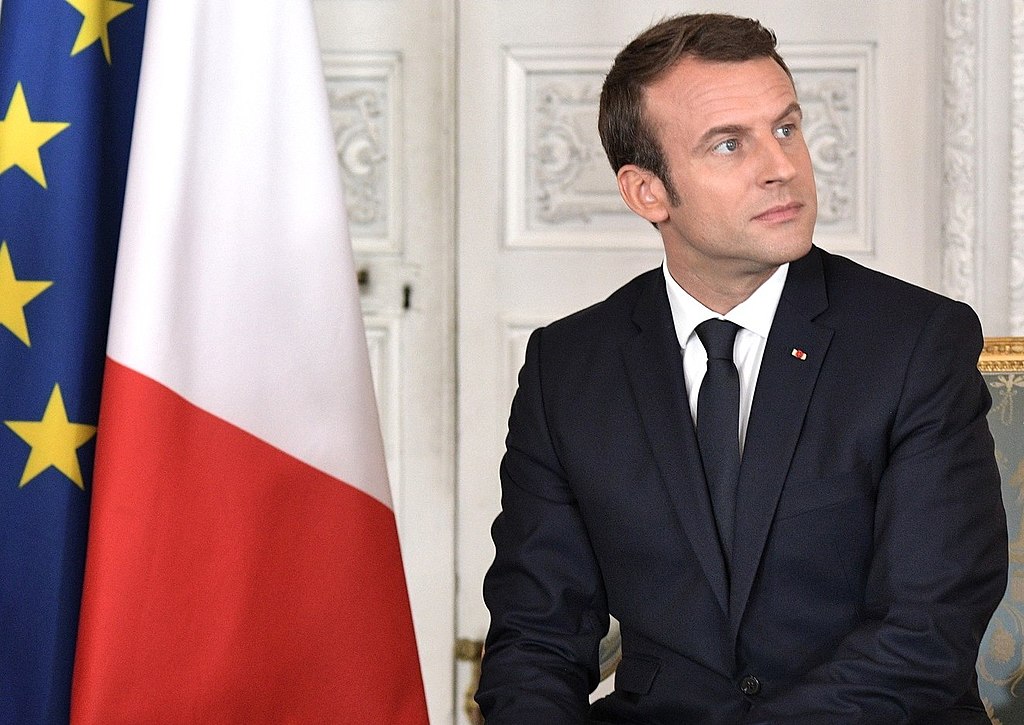
French president Emmanuel Macron, photographed in 2017. (Kremlin.ru / Wikimedia Commons)
What is the point of France-Africa summits? This provocative question was raised by Thomas Sankara during the Vittel Summit in October 1983. Speaking to a defensive French press, the Burkina Faso head of state and revolutionary leader admitted that he had no satisfactory answer; it was obvious, to him at least, that this type of meeting with the old colonial power was hardly the most appropriate forum for discussing Africa’s own problems.
Despite Sankara’s criticism, French-speaking heads of state — gradually joined by their counterparts from the rest of the African continent — continued to perform this ritual. The meetup was recently renamed the “Africa-France” summit, no doubt to dispel the generally unflattering perceptions associated with “Françafrique,” a term used to refer to Paris’s problematic relations with its former colonial territories.
For this year’s Africa-France summit in Montpellier, France, the former colonizer also has a further innovation: the absence of African heads of states and the introduction of “civil society,” including prominent African personalities whom French president Emmanuel Macron has chosen as his interlocutors. But far from a break with Paris talking down to Africa, the emergence of this neoimperial “civil society” should be understood as a last-ditch attempt to shore up France’s increasingly challenged hegemonic ambitions.