Gays Against Imperialism
In the 1970s, pioneering gay activists in the US and Britain saw the fight against homophobia as part of a much broader struggle — one that linked Pride to the cause of liberating the world’s oppressed peoples.
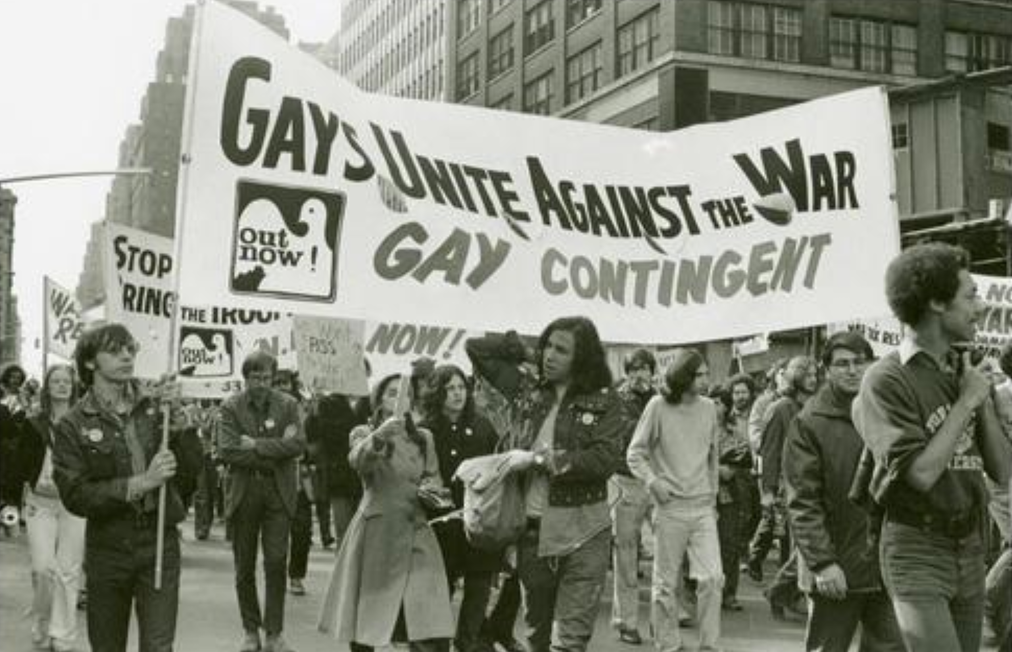
A gay contingent in an anti–Vietnam War protest, 1971. (Diana Davies / New York Public Library)
“Gay Liberation is for the homosexual who stands up, and fights back.” In 1970, the year after the Stonewall riots, fliers for the first Christopher Street Liberation Day captured the theory, practice, and spirit of a new generation driven to action. The origins of this new movement and its principles of popular mobilization, however, can be found as much in the struggles for freedom fought in Cuba, Algeria, Vietnam, South Africa, and Palestine as Manhattan’s West Village or Islington’s Highbury Fields.
Stonewall wasn’t the first time queer people in the United States had revolted against police repression, but its importance reflects a revolutionary moment in the history of LGBT struggle. The riots signaled a new unity forged between the established, largely white homosexual rights campaigns and an insurgent movement of people of color — and the integration of the new gay liberation movement into revolutionary political fronts across the world. By the mid-1960s, riots against police violence exploded across the United States, largely led by black youth. The people who confronted the police at Stonewall belonged to the most criminalized sections of society: black, Latino, homeless, sex workers, and gender nonconforming people. A large number of participants were seasoned activists already involved in a wide range of struggles, a fact that is elided by the contemporary understanding of Stonewall as a purely spontaneous eruption.
As they fought to liberate the Village from the police, the locus of legitimacy shifted to those on the front lines. Meetings of the Mattachine Society — then the main established homosexual organization — swelled. The appeal of radical politics grew, and there was no more powerful contemporary example of popular mobilization than the national liberation movements advancing across three continents, in what Frantz Fanon described as an “immense tyranny-destroying wave.” Gay Liberation Fronts — their names taking direct inspiration from anti-colonial movements in Algeria and Vietnam — were founded in the United States and Britain. Around them, a rich gay associational life and vibrant gay culture flourished, the foundation and engine of a movement that went on to win important freedoms.