Capitalism Made Gay Identity Possible. Now We Must Destroy Capitalism.
Gay identity became possible thanks to capitalism’s emancipatory side: its liberation of the individual from material dependence on the family. But that sexual freedom wasn’t automatic — it required decades of militant struggle. Today, we need more such struggles to combat the oppressive aspects of capitalism, which keep gay and straight people alike from living fully free lives.
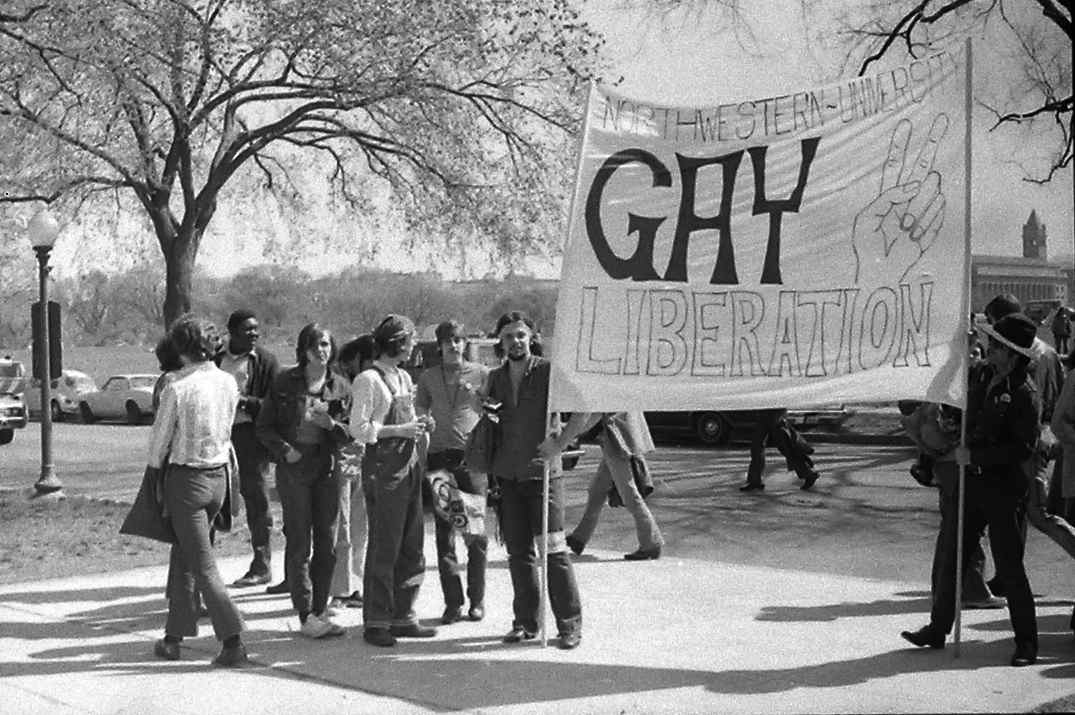
A gay liberation group from Northwestern University attends an anti–Vietnam War demonstration in Washington DC. (Wikimedia Comons)
John D’Emilio wrote the first draft of “Capitalism and Gay Identity” in 1979. Originally delivered as a speech and later published as an essay, the ideas in it were informed partly by D’Emilio’s intensive political self-education in a gay men’s Marxist reading group in the years between Stonewall and the AIDS crisis.
Gay activists diligently studying Marx’s Capital together has not necessarily been a frequent occurrence throughout American history, but phenomena of this type did occur more frequently during a few years in the seventies, when activists briefly understood anti-capitalism to be a self-evident component of gay liberation. In keeping with those politics, “Capitalism and Gay Identity” ends with an exhortation to oppose not merely homophobic oppression, narrowly defined, but exploitation and economic inequality writ large.
“Capitalism and Gay Identity” presents a Marxist history of the emergence of modern gay subjectivity, grounded in an analysis of changing modes of production and material conditions. This interpretation of our history is uncommon in LGBT political circles today. So is the idea that modern homophobia is the scapegoating of gay people for the social transformations brought about by capitalism, not all of which have been as liberatory as the separation of sexuality and procreation. These ideas deserve serious consideration from a new generation of LGBT left-wing activists, many of whom are already socialists.