Why Stonewall Matters Today
Stonewall wasn’t just an uprising for LGBT rights — it was also part of a broader movement that fought racism, war, and poverty. To go beyond today’s tepid gay activism, we need to remember its anti-capitalism.
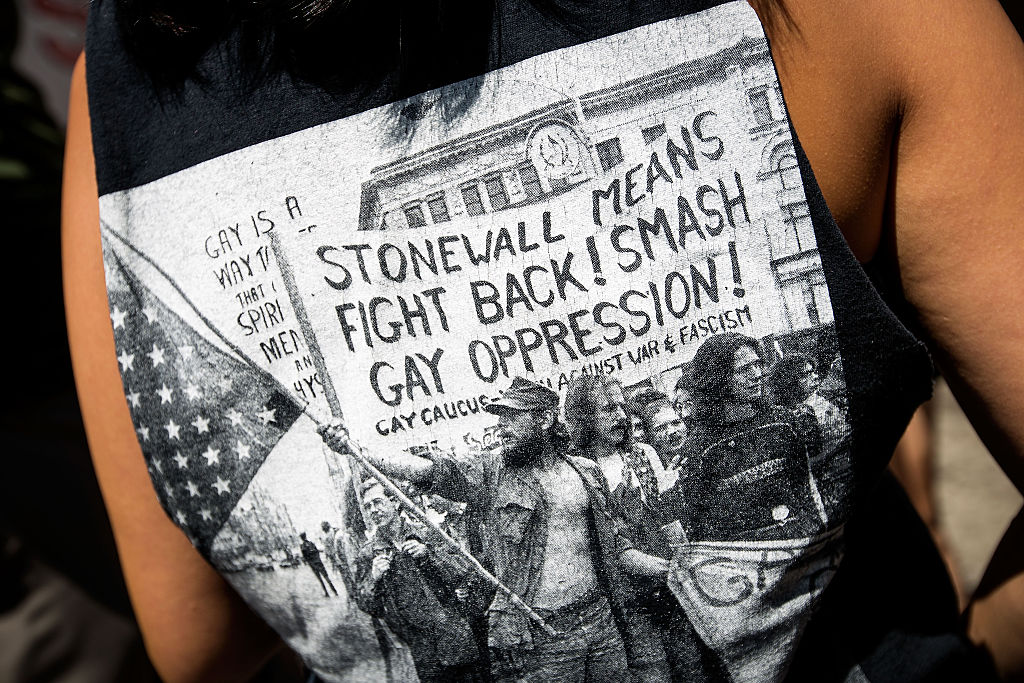
A woman wears a t-shirt honoring the gay rights movement outside the Stonewall Inn on June 24, 2016 in New York City. (Drew Angerer / Getty Images)
The police raid on New York’s Stonewall Inn fifty years ago this month is widely viewed as the most pivotal event in LGBT* history, spawning a movement which prompted many millions around the globe to come out of the closet and fight for their freedom. But for all its significance, the movement launched by the 1969 Stonewall Rebellion remains poorly understood today, even by many radical LGBT people who sing its praises.
Black Lives Matter activists today make the legitimate complaint that “moderates” defang the radical ideas of such bold predecessors as Martin Luther King, Jr, Ella Baker, Malcolm X, and the Black Panther Party by either outright distorting their ideas or ignoring them altogether. Likewise, on this half-century anniversary of Stonewall, we should expect similar treatment from “mainstream” LGBT people, liberals and conservatives alike, for whom Stonewall is an occasion for vacuous self-congratulation, and parades of rainbow-themed beer floats and politicians.
Stonewall was a profoundly radical event, and not just because a multiracial group of LGBT people rioted for a few nights against the police, turning a routine aspect of anti-gay oppression on its face.