In Britain, Seasonal Farm Laborers Toil for Subminimum-Wage Piece Rates
Since the end of free movement within the EU, Britain's farms have relied on seasonal migrants allowed into the country for just a few months at a time. Denied almost any possibility to change jobs, their situation shows how bosses can use visa rules to blackmail a pliant workforce into swallowing the most degrading conditions.
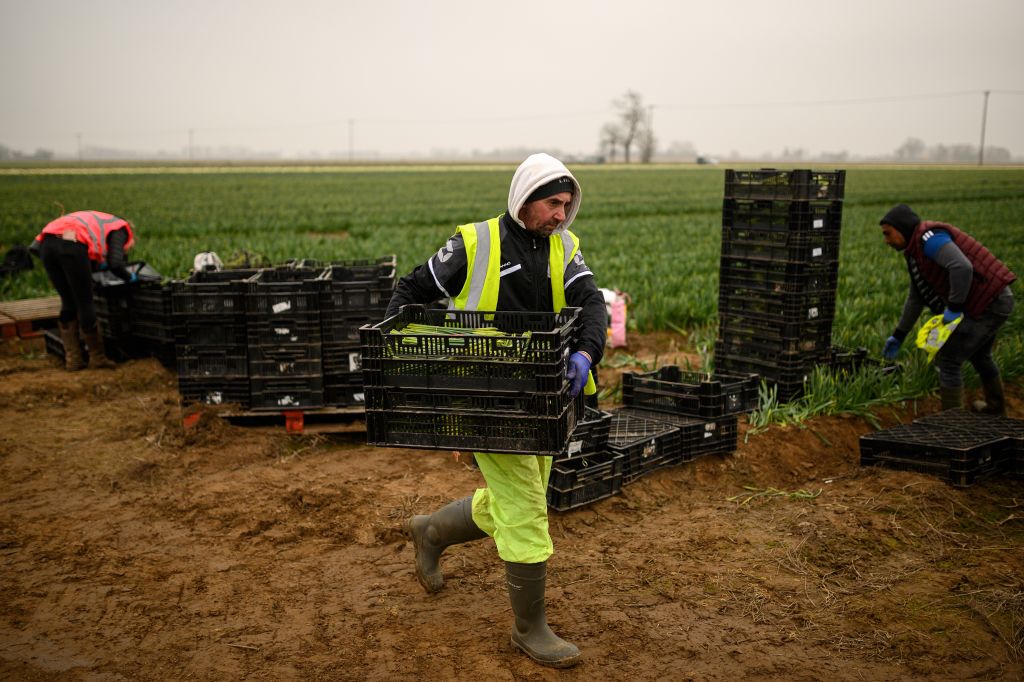
Migrant workers from Romania harvest daffodils on Taylors Bulbs Farm near Holbeach in eastern England. (Oli Scarff / AFP via Getty Images)
Last spring, the pandemic caught European farming businesses and governments unprepared. As travel restrictions were hurriedly introduced, EU bureaucrats understood that seasonal migrant laborers were indeed “essential workers” — notwithstanding their low pay and exploitative conditions. Emergency measures were taken to secure the harvest and food supply, with migrant-regularization measures and ad hoc visa extensions that would have been inconceivable in “normal” times.
While this impromptu legislation partially weathered the storm, there were still shortages. Meanwhile, employers’ disregard for COVID-19 precautions — coupled with absent enforcement capacities — itself spread the virus. German farms and meat processing plants became infection hotspots, with similar outbreaks among crop pickers in Herefordshire and Tayside (Britain), Lleida and Murcia (Spain), Mondragone and Reggio Calabria (Italy), and elsewhere. Nonetheless, 2020 ended with triumphant rhetoric from European institutions, celebrating both the rapid development of vaccines and increased preparedness for a forthcoming harvesting season.
In October, Europe’s Council of Ministers recognized seasonal workers’ plight. Having welcomed the Commission’s July 2020 guidelines on fighting the abusive practices faced by migrant workers, the Council urged EU member states to enhance the protection of laborers compelled to travel across the continent each year. And more work was expected for them.