The EU’s Seasonal Farm Workers Are Still Forced to Travel During the Pandemic
Photos of Eastern Europeans flown West to pick strawberries despite the lockdown has focused attention on the plight of the EU’s migrant farm laborers. But as some of these workers told Jacobin, traveling across Europe to make ends meet isn’t new — it’s just much more dangerous now.
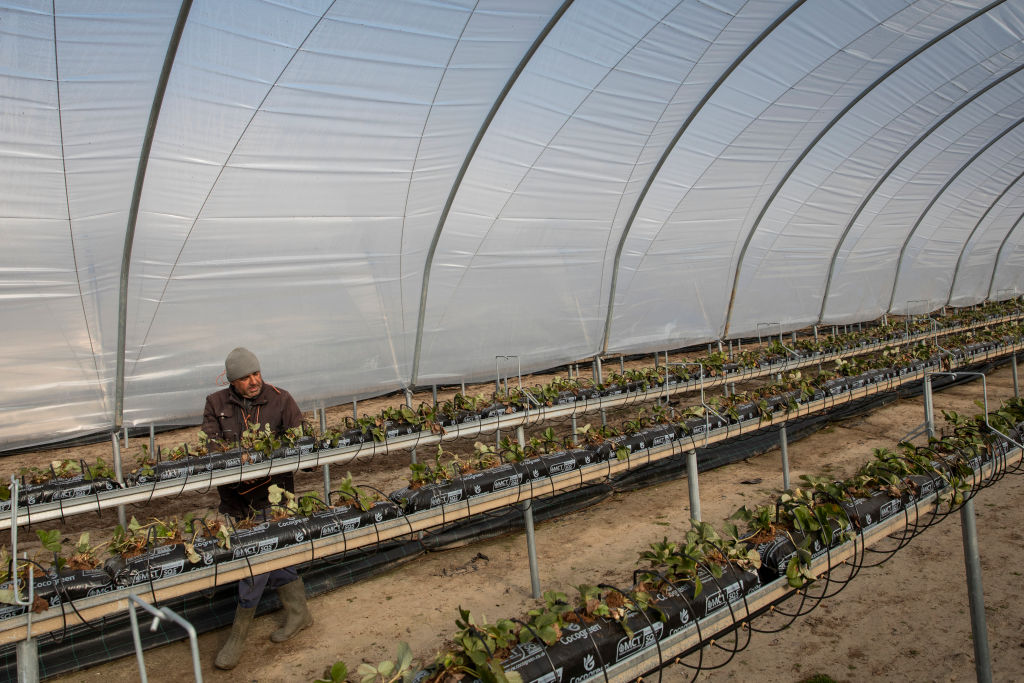
A seasonal worker tends to strawberries inside a polytunnel ahead of the fruit-picking season at a farm on March 31, 2020 in Rochester, Kent. Dan Kitwood / Getty
For Kamen and Liliana (not their real names), a Bulgarian couple in their late fifties who spend half the year picking produce around England, the coronavirus quarantine was not a reason to stay home. Rather, fearing that they would end up being locked out of their seasonal agricultural jobs back in the UK, the two returned there in March: “We arrived in Bulgaria and the government announced the lockdown the next day. We stayed for ten days and returned to a new farm in the UK.”
Currently, they work at an oil crop farm for the minimum wage (£8.72 per hour; around $10.80) and live in camps together with other farm workers. They pay their boss rent for this meager accommodation, ensuring that part of their wages flows right back into his pockets. “We used to live in a caravan, very luxurious, we had everything. But there’s very few people at this farm. It’s a camp with two huge caravans. We pay rent for the accommodation — the price is the same everywhere outside of London, £55 a week, bills included.”
While their work does not include harvesting and is much easier than picking leeks — like they did at another farm earlier this year — the excruciating heat in the greenhouse exhausts them and drives away younger workers who’d rather work outside. For their part, they are just relieved to have legitimate work contracts and thus be plugged into UK tax and pension schemes.