Why Migrant Farm Workers Are Living Four to a Caravan in a Time of Social Distancing
Even as governments halt nonessential travel, thousands of workers are being flown from Eastern Europe to pick farm produce in Britain. Housed several workers to a caravan and often paid below minimum wage, their experience shows how “flexible” seasonal hiring allows bosses to flout the most basic workers’ rights.
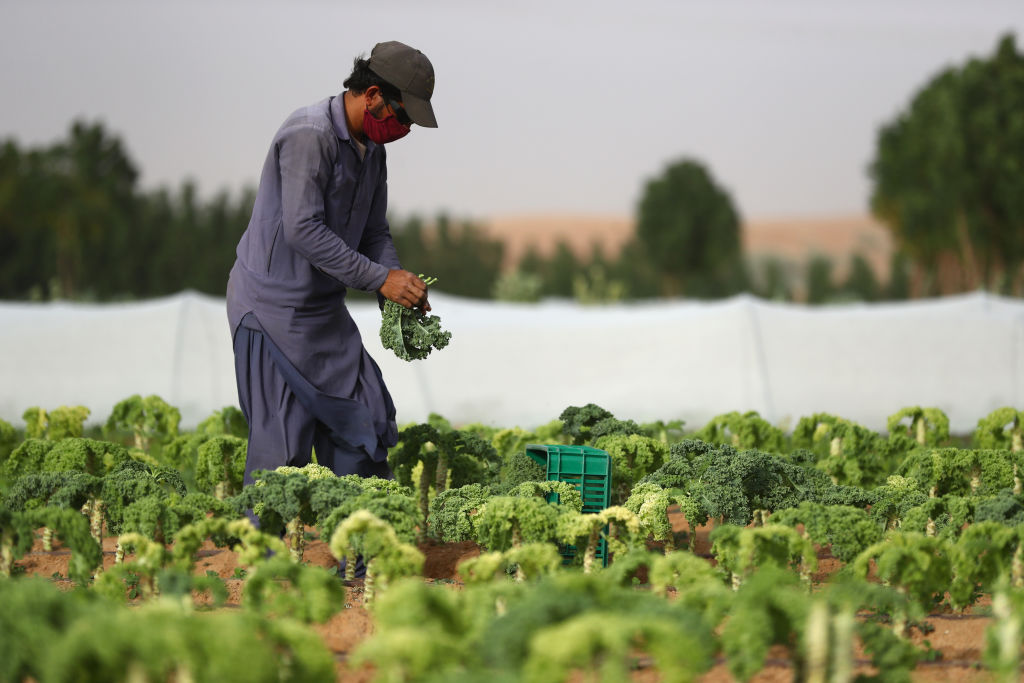
A farmworker harvesting kale on April 9, 2020. (Francois Nel / Getty Images)
In late March, claims that the COVID-19 pandemic risks inducing dwindling supplies of fresh fruit and vegetables were catapulted into the limelight. Farming businesses across Europe are now faced with the quandary of finding workers to harvest early crops at a time of state-imposed travel bans. Added to that are the pressures on intercontinental supply chains with border restrictions proliferating in Africa as well as scarcities of truck drivers and containers. In Kenya, a leading supplier of Europe’s green beans and peas, half of the workers involved in growing and exporting have been sent home as flights are grounded and freight prices rise. Despite efforts to open up “green lanes” to allow fresh produce to move rapidly across the EU’s borders, with each passing day the possibility of crops rotting in the fields gains credence — raising expectations about skyrocketing food prices. Faced with such dramas, agro-capital’s first port of call has become the flexible reserve army of Eastern European labor.
To unpack this conundrum — in which the seasonal migrant workforce constitutes the single internationally mobile section of Europe’s working classes — it’s worth looking back to the conference held by EU leaders on March 26. That day, the European Commission was asked to draw up guidelines guaranteeing that seasonal workers would be able to continue working, notwithstanding the lockdowns imposed across the continent. The joint statement emanating from this video call declared that the EU governments, partnering with the commission, were ready to address the problems of “cross-border and seasonal workers who have to be able to continue essential activities while avoiding the further spread of the virus.” Already, food sector employees are counted alongside health personnel as “critical” workers whose movement must not be hindered.
Similarly, in the immediate aftermath of the UK’s nationwide lockdown, farming organizations and recruitment agencies started voicing concerns that the enormous economic disruption — a fall in real GDP which the Office for Budget Responsibility currently estimates to reach around 35 percent in the second quarter alone — will be particularly detrimental to the sector. The National Farmers’ Union, the Association of Labour Providers, and the British Summer Fruits called on British residents to fill the jobs usually done by imported seasonal workers. In the words of the secretary of state for environment, George Eustice, “we need to mobilize the British workforce to fill that gap and make sure our excellent fruit and vegetables are on people’s plates over the summer months.”