When Trump Does It, It’s a Coup. When It Happens In Bolivia, It Doesn’t Matter.
When Trump hyped bogus claims of election fraud as a pretext to overturn an election he lost, the media portrayed it as the gravest threat to democracy in the history of the Republic. When exactly the same thing happened in Bolivia, they said it was actually good.
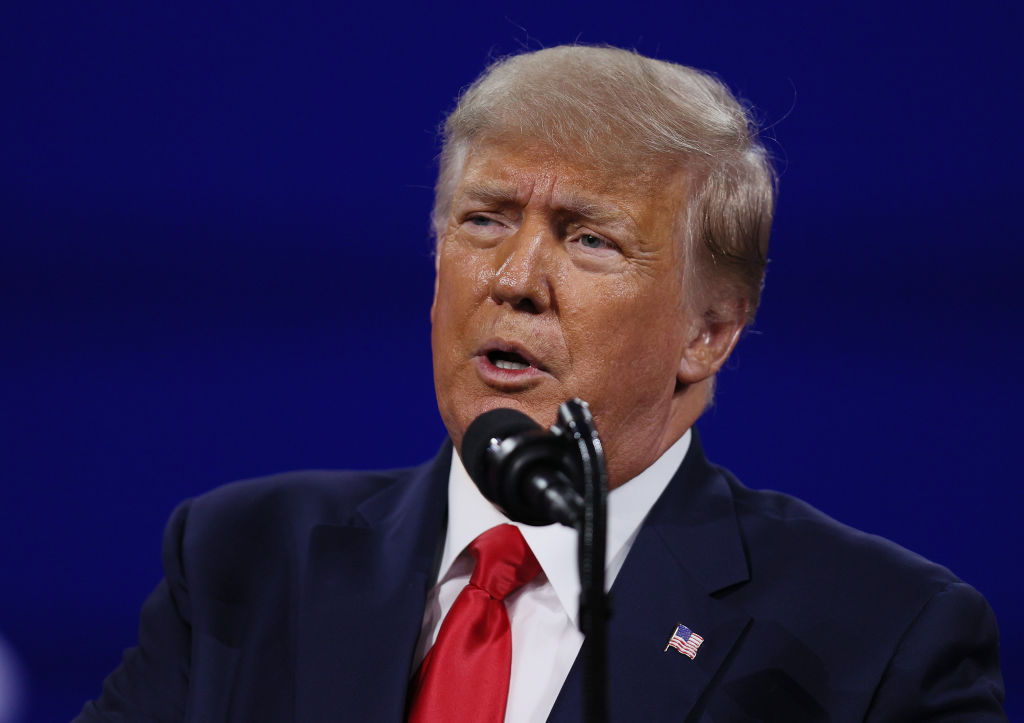
Former president Donald Trump addresses the Conservative Political Action Conference on February 28, 2021 in Orlando, Florida. (Joe Raedle / Getty Images)
A little over a year apart, two remarkably similar antidemocratic incidents took place.
The first you’ll be familiar with. After an election that saw late-counted mail-in ballots from disproportionately liberal voters vaporize Donald Trump’s early lead and put his more liberal rival, Joe Biden, on top, Trump did exactly what many had predicted: he refused to concede the election, alleged fraud and other shenanigans, and spent the next weeks riling up his supporters. This culminated in, at his and allies’ urging, a crowd of hundreds of them — some of them law enforcement and military — storming the US Capitol, ostensibly hoping to stop the official certification of the result and keep Trump in power. In the process, they damaged the hallowed building, gave lawmakers a fright, and possibly killed one person, a police officer (the other four who died were members of the riot). But with even the participants themselves seemingly unsure of what they were actually trying to do, the action failed, and Biden became president.
Rewind fourteen months to events in Bolivia. After an election that saw late-counted ballots from more rural and highland areas extend left-wing president Evo Morales’s early lead past the threshold for a runoff, his right-wing opposition refused to concede the election, alleged fraud and other shenanigans, and spent weeks riling up their supporters. This culminated in crowds around the country, with the support of police, attacking politicians from Morales’s Movement Toward Socialism (MAS) party, setting ballot boxes alight outside vote-counting locations, and even breaking into Morales’s house, ransacking and burning down buildings and leaving at least a dozen dead. With political instability ramping up, the Bolivian military pressured Morales to step down, while hard-right Christian fundamentalist Jeanine Áñez declared herself interim president illegally, in a Senate chamber without the constitutionally required quorum.