How the QAnon Cult Stormed the Capitol
Perhaps the strangest thing about the media coverage of the Capitol Hill rally was how little of it focused on the visible presence of QAnon. What’s behind the Q cult, and how can we confront it?
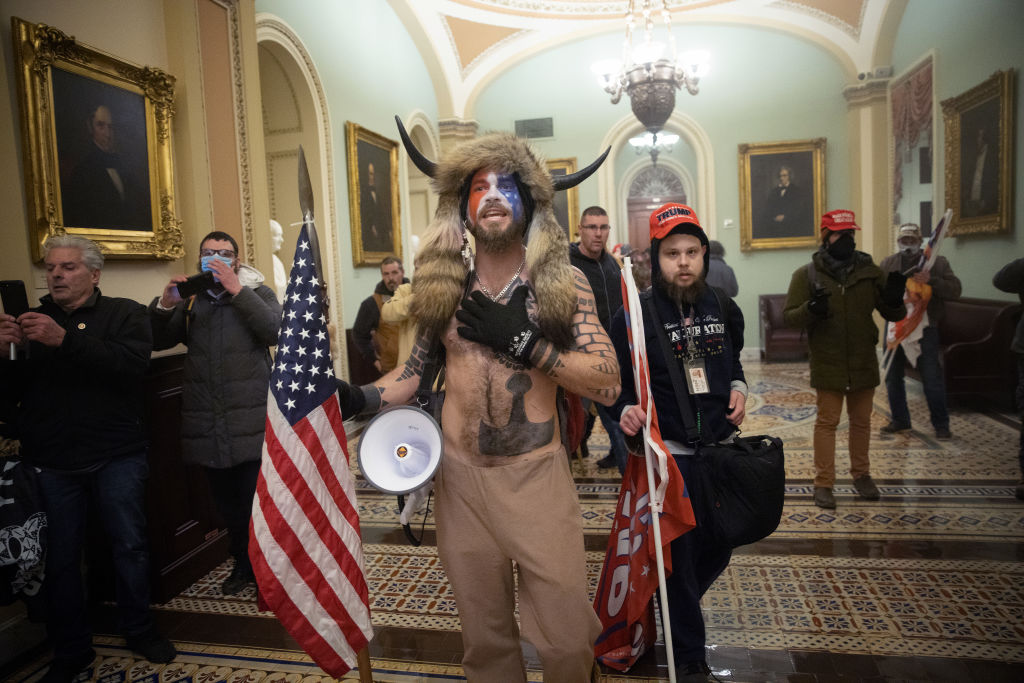
A pro-Trump mob confronts the US Capitol Police outside the Senate chamber of the US Capitol Building on January 6, 2021 in Washington, DC. (Win McNamee / Getty Images)
Perhaps the strangest thing about the media coverage of the Capitol Hill rally was how little of it focused on the visible and disproportionate representation of QAnon, an online community of conspiracy theorists that started in October 2017 when an anonymous 4chan post foretold the impending arrest of Hillary Clinton.
According to the Daily Beast’s Will Sommer, who was reporting on the ground, the rally consisted not only of Trump-supporting, straight-ticket Republicans, but a visibly high number of Q true believers. In fact, Ashli Babbitt, an Air Force veteran who was shot to death by Capitol Police, was an ardent member of the Q faithful, as was Rosanne Boyland, who was reportedly trampled to death during the conflagration.
Q adherents come from an increasingly eclectic set of backgrounds: you’ll find NEETS, police officers, military veterans, service workers, computer programmers, successful business owners, unsuccessful business owners, stay-at-home moms, and regular working stiffs. QAnon-ers also hail from a number of identity groups, uniting straight cis white men with women and racial, ethnic, sexual, gender, and religious minorities. You’ll even find immigrants, visibly represented by the bright South Vietnamese flags seen flying at the rally. The movement boasts Zoomers, boomers, and everyone in between.