The Social Justice Unionism of Wendell Young III
The Philadelphia union leader Wendell Young III straddled the worlds of the labor movement born out of the New Deal and the social movements of the New Left. He believed that uniting these two worlds in struggle could transform the United States.
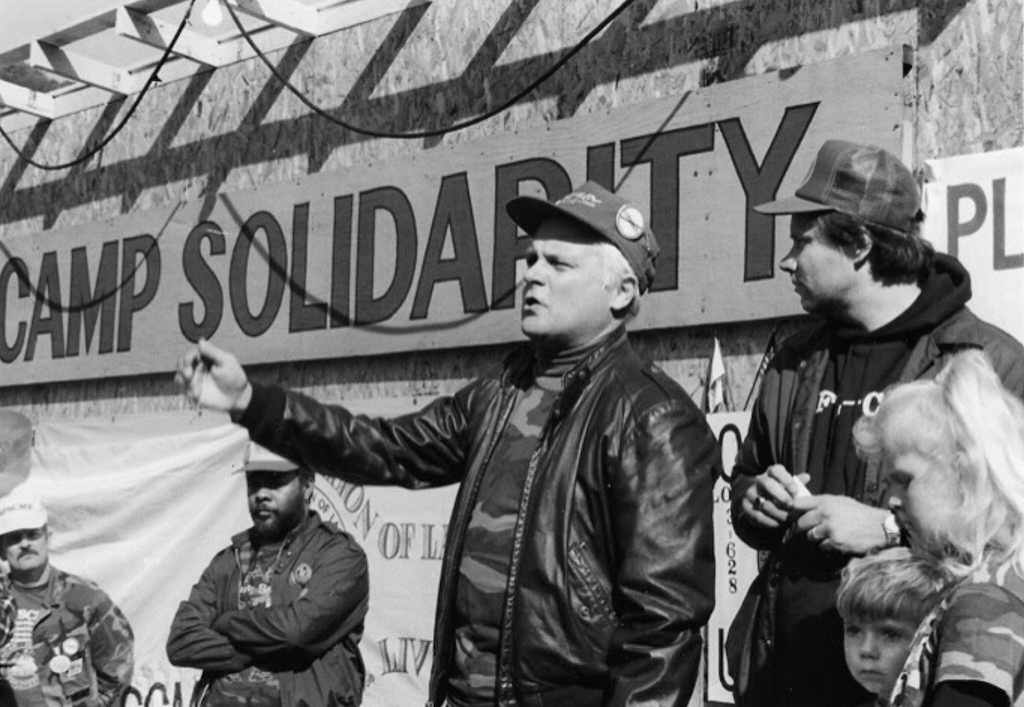
Wendell Young III speaking in support of striking miners in Pittston, Pennsylvania, 1989. (Collection of Wendell W. Young III)
Political memoirs are generally the domain of the ruling class. There is no shortage of literature from presidents, prime ministers, and political party leaders reliving their deeds. But what about union leaders? Despite the fact that unions were one of the dominant social and political institutions throughout the twentieth century, few union leaders have penned memoirs.
While union leaders should not be fetishized, they play a role in shaping one of the only vehicles for working-class political advancement we have, balancing the fight over the day-to-day concerns of their members and the broader interests of all working people. This kind of direct engagement with a mass constituency should be of interest to anyone of the Left.
Wendell W. Young III was a beacon of progressive, militant trade unionism in the Philadelphia area for decades as head of the Retail Clerks Union Local 1537 (which eventually became United Food and Commercial Workers (UFCW) Local 1776 through a merger). The Memoirs of Wendell W. Young III: A Life in Philadelphia Labor and Politics, edited by labor historian Francis Ryan, offers a rich perspective on his many political triumphs and defeats.