Why Workers Everywhere Should Read Labor’s Untold Story
Reading and study are required for militants in any labor union. And there are few better resources for telling the heroic story of American class struggle to workers today than the classic labor history book Labor’s Untold Story.
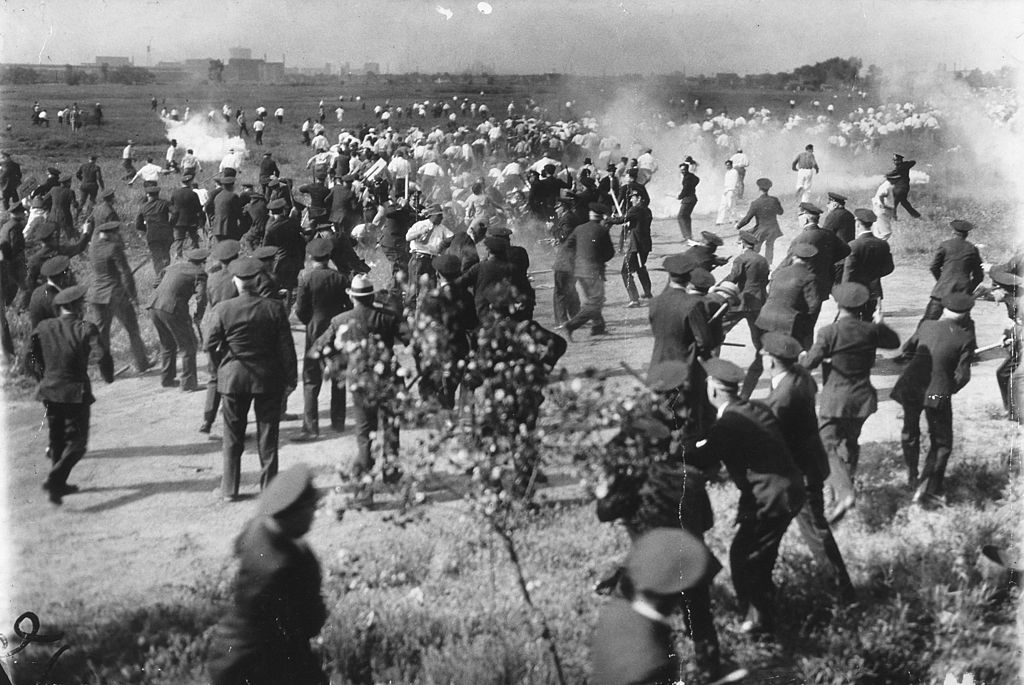
Steelworker strikers assembled in front of the Chicago Republic Steel plant in 1937 during the Little Steel strike and were menaced by company goons and cops who attacked, killed, and grievously wounded twenty-three people. (Wikimedia Commons)
Labor’s Untold Story has been for many decades the definitive labor history book for union members and students here and abroad. In fact, for a long time in the 1960s, ’70s, and ’80s, there was little else available for anyone who wanted to read something substantial on the subject. As the cover has advertised since its first publication in 1955, it is “The adventure story of the battles, betrayals and victories of American working men and women.”
And as authors Richard Boyer and Herbert Morais intended, their book was a partisan call to action for workers playing their parts in the broad class struggle. There’s no love for the bosses or their political front men in this volume.
Labor’s Untold Story takes a side — the working class’s. It’s a book intended to educate and motivate the reader, portraying class struggle as anything but an academic exercise. The original cover in 1955 featured a photo of steelworker strikers assembled in front of the Chicago Republic Steel plant, being menaced by cops and company goons, just seconds before the cops attacked, killed, and grievously wounded twenty-three of those strikers in the 1937 Little Steel strike.