John Sweeney Was Our Era’s Most Influential Labor Leader
The late AFL-CIO leader John Sweeney was an admirable figure who had a vision for reinvigorated US labor unions. But he only tried to reform a union movement that needed a more fundamental refoundation.
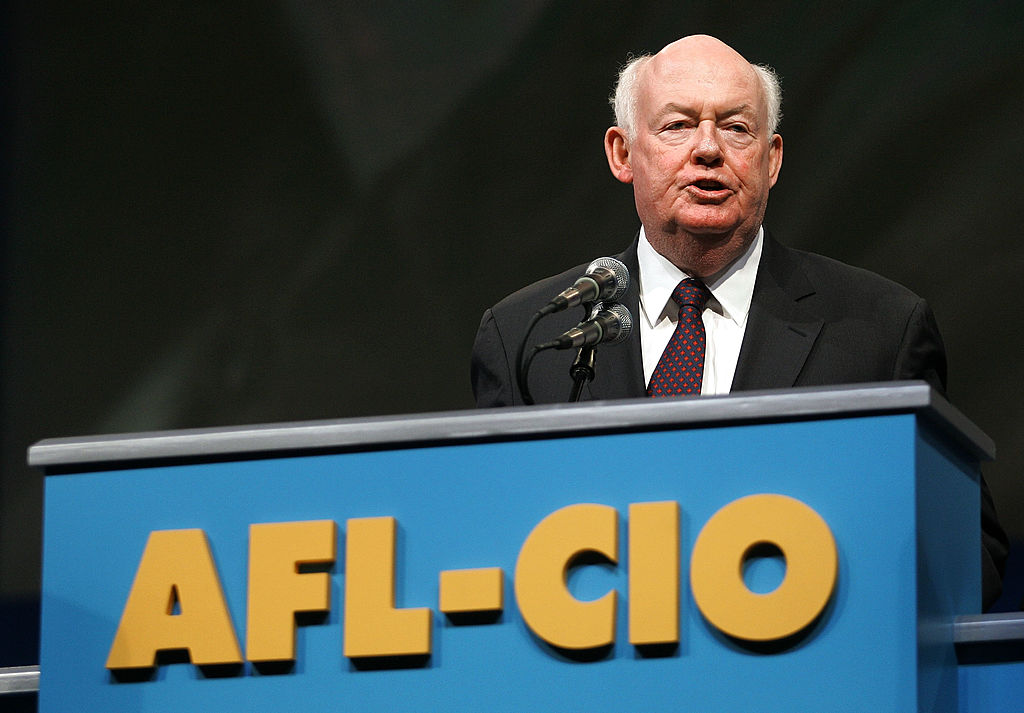
John Sweeney, AFL-CIO president, at the 25th Constitutional Convention of the AFL-CIO on July 25, 2005 in Chicago, Illinois. (Tim Boyle / Getty Images)
A reflection on the life and work of John Sweeney is challenging because it forces us to distinguish our personal feelings about a man both of us knew and worked with for years from an examination of his historic yet complicated role as a central figure in the US trade union movement.
John Sweeney was probably the single most important US labor reformer of our time. Leading the Service Employees International Union (SEIU), he advanced an internal reform and modernization process that had begun under George Hardy, resulting in the dramatic growth of the union. In 1994, out of disgust with the lethargy in the national AFL-CIO, Sweeney first attempted to move then-president Lane Kirkland out, challenging him and his successor, Tom Donahue, for the presidency of the national federation. Leading the “New Voices” slate, Sweeney and running mates Richard Trumka and Linda Chavez-Thompson secured a historic win in 1995 and attempted to redirect organized labor.
Assessing John Sweeney in SEIU and the AFL-CIO requires accounting for nuance, personality, and politics. The child of working-class Irish immigrants in New York, Sweeney chose to enter the trade union movement, first through the International Ladies Garment Workers Union and later through SEIU Local 32B/32J in New York City. He became president of SEIU in 1981.