“The Labor Movement Needs to Learn Its History”
With union membership at record lows, we need to look to the past to dig ourselves out of the present. The radical-led Farm Equipment Workers Union, which fought for shop-floor democracy and racial equality, is a guide.
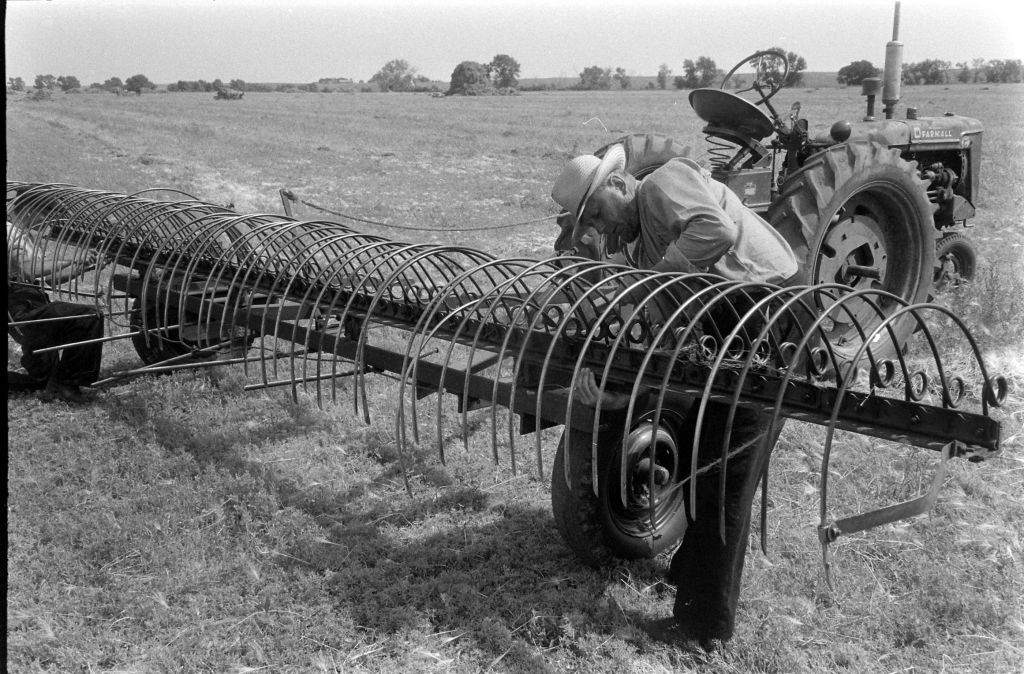
A worker fixing a combine harvester at a farm in the United States in 1956. (Wallace Kirkland / Getty Images)
At the height of organized labor in the 1950s, 28 percent of American workers were unionized. But after decades of union-busting, right-to-work legislation, and the loss of union jobs, membership has now sunk to just 10 percent of workers, or just 6 percent in the private sector.
The past two years have bucked this trend however, and a resurgence in union activity saw more than four hundred thousand workers, including teachers and nurses, go on strike in 2019. As American labor militancy grows again, it’s important to study the movements of the past. In the radical history of American unions, the story of United Farm Equipment Workers of America (FE) stands out. Despite its small size, the FE challenged and won major concessions from International Harvester, a manufacturing titan run by the oligarchs of the McCormick family, throughout the 1940s.
To learn more about the FE and its struggles, and what organizers today can learn from their efforts, Jacobin spoke with labor historian Toni Gilpin, author of The Long Deep Grudge: A Story of Big Capital, Radical Labor, and Class War in the American Heartland.