In the 1970s, Social Democracy Was in Retreat. British Columbia’s NDP Fought for It, Anyway.
Dave Barrett’s NDP government in British Columbia was one of the most impressive examples of social democracy in action during the twilight of the Keynesian era. But the BC NDP lacked a proper strategy to deal with the power of capital, which eventually forced it into retreat.
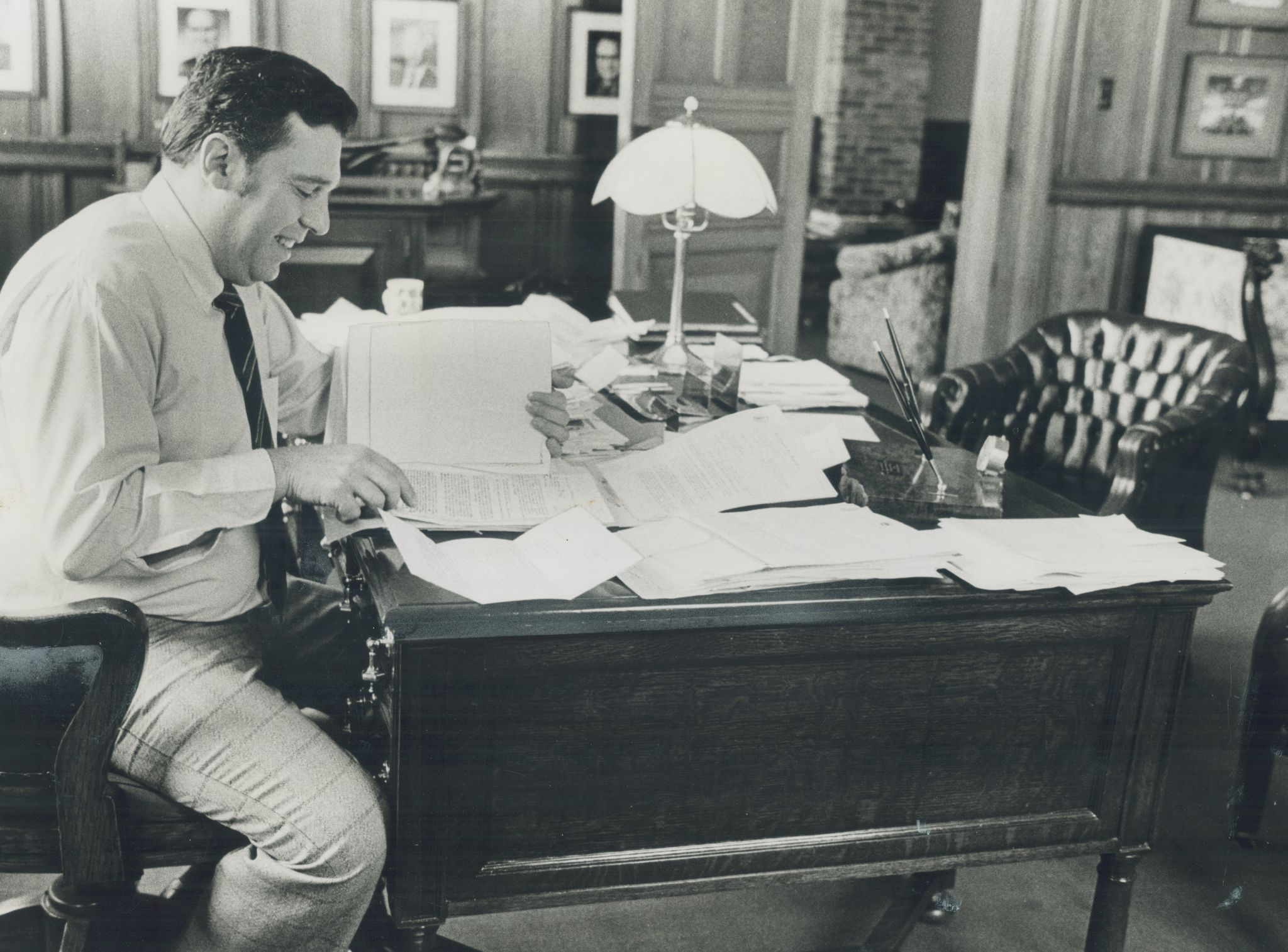
Dave Barrett was the premier of British Columbia from 1972 and 1975. (Getty Images)
In 1972, British Columbia’s New Democratic Party won a majority for the first time in the province’s history. Due in part to BC’s strong tradition of labor militancy, its electoral system had been purposefully designed to block the prospect of a left-wing government. In the past, this had prevented both the Co-operative Commonwealth Federation (CCF, the NDP’s precursor) and the NDP from gaining power.
Led by Dave Barrett, the BC NDP government was characterized by its breakneck legislative speed. In its “legislation by thunderbolt,” the Barrett administration demonstrated that social-democratic parties could still carry out progressive reforms in the late Keynesian era. But the breakdown of the Keynesian order — alongside the limits of the NDP’s approach — meant these strategies were ill-equipped for the coming neoliberal backlash.
The Socialist Threat Contained, 1941–1972
The CCF had emerged as British Columbia’s official opposition in 1941 with 33 percent of the vote. Support for the party remained high, with 37 percent of the vote in 1945 and 35 percent in 1949.