Jerry Rawlings (1947–2020)
Former Ghanaian president Jerry Rawlings died last month at the age of 73. He went from heading two revolutionary governments to championing neoliberal reforms, but he left behind an important legacy for progressives and radicals.
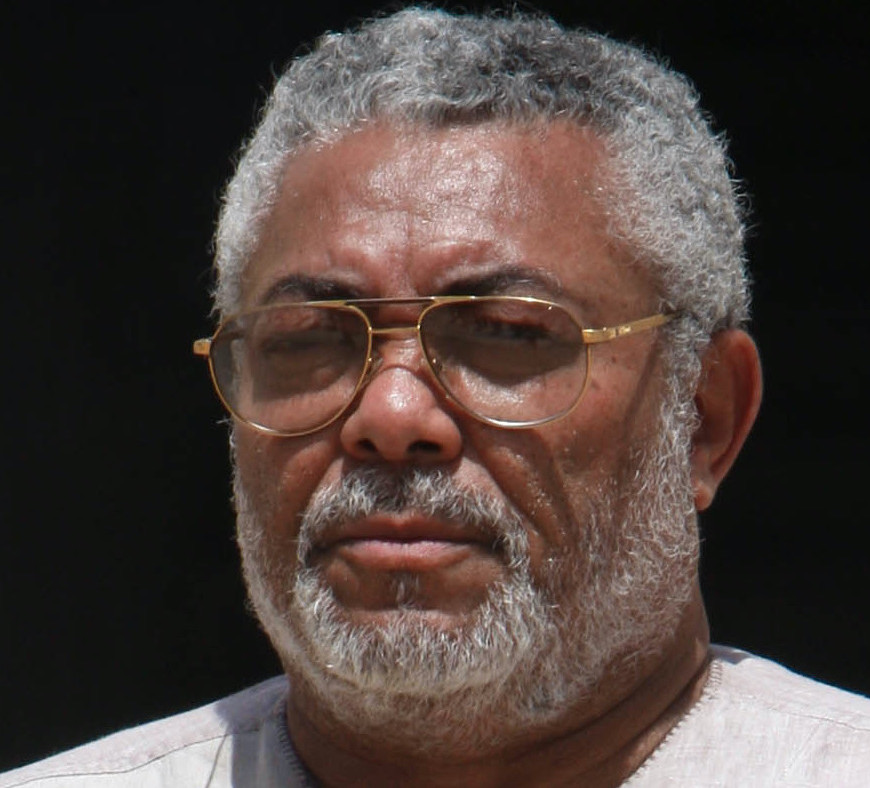
Jerry Rawlings in Mogadishu, Somalia in February 2012. (Wikimedia Commons)
Early on November 12, retired major Henry Smith called me from London to tell me that his former comrade and friend, Flight Lieutenant Jerry John Rawlings had died. Rawlings lived many lives, transforming from idealistic young Air Force pilot to imprisoned coup-plotter to chairman of two revolutionary military governments to champion of neoliberal reform and president of Ghana’s 4th Republic, before peacefully handing over power in 2001.
I had gotten to know Rawlings over several years after he graciously allowed me to do a series of interviews for a book on the revolutionary era in Ghana. I was disturbed to read the international coverage of his passing, which was not only riddled with factual errors but told a simplistic story of a stereotypic autocratic African military ruler.
Rawlings was the transcendent African political figure of his generation. His complex story reveals the grand political transformations of the late twentieth century and the ongoing significance of 1970s global geopolitics. Even as he led his nation across several political eras, Rawlings maintained a lifelong passion for alleviating the suffering of the nation’s and the continent’s most needy citizens. He was one of the last radical 1970s heads of state, and one of the few who lived to old age. Most revolutionaries of that era died in exile or, like Maurice Bishop in Grenada and Thomas Sankara in Burkina Faso, were killed as they challenged the West and experimented with new forms of governance.