Rescuing Nkrumah
In today’s Ghana, the socialist ideas of the country’s first president Kwame Nkrumah have been declared irrelevant by the major parties. But a new generation is reviving them and giving them an organizational home.
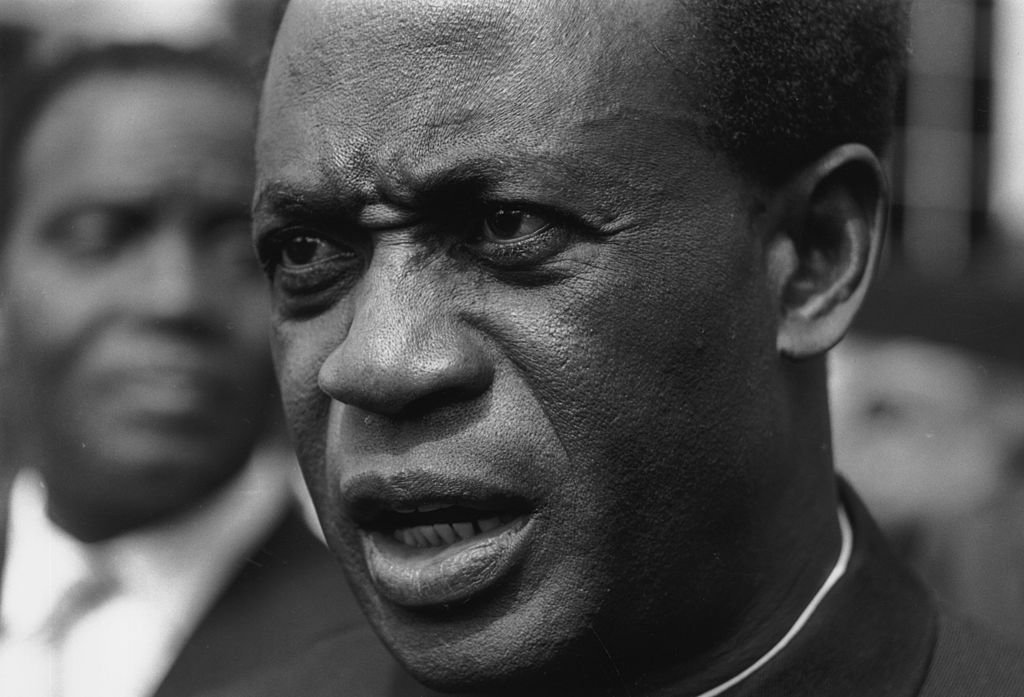
Dr Kwame Nkrumah, prime minister of Ghana at a Commonwealth Prime Ministers Conference, Marlborough House, London, June 18, 1965.Terry Fincher / Express / Getty
In June, at an easy-to-miss two-story house with chipping white paint in Accra’s Asylum Down neighborhood, the Convention People’s Party (CPP) — Ghana’s oldest political party and the party founded by radical Pan-Africanist Kwame Nkrumah — celebrated its seventieth anniversary. Despite the presence of the Winneba Youth Choir and a large cake decorated in the party’s red, white, and green, a greater number of the white plastic folding chairs arranged under the guest tent remained empty rather than filled. The honored guests sitting on stage and the media workers roaming across the view likely outnumbered the guests by two-to-one.
Elder CPP apparatchiks and former party members gave speeches to a mostly absent crowd. Despite there being few ears to hear it, a single theme emerged: the need for the party of Nkrumah and its long-separated factions to reunite and support a single candidate in the approaching presidential elections.
Reunification may be the smallest of the challenges facing the party that still boasts Nkrumah’s cockerel as its symbol, in a country where the political imagination has been crippled by neoliberalism, where the two establishment parties compete primarily for who is the least corrupt and has the best slogans, and where political allegiance is fluid to nonexistent. Meanwhile, the parties the CPP hopes to reunite have maintained as much electoral significance as they have cohesion.