The US’s Neglect of the Elderly Has Turned Murderous
The catastrophe that continues to unfold across the US as COVID-19 spreads is disproportionately affecting older people, who are perishing in far greater numbers than any other group. In a pandemic, our routine neglect of the elderly has turned murderous.
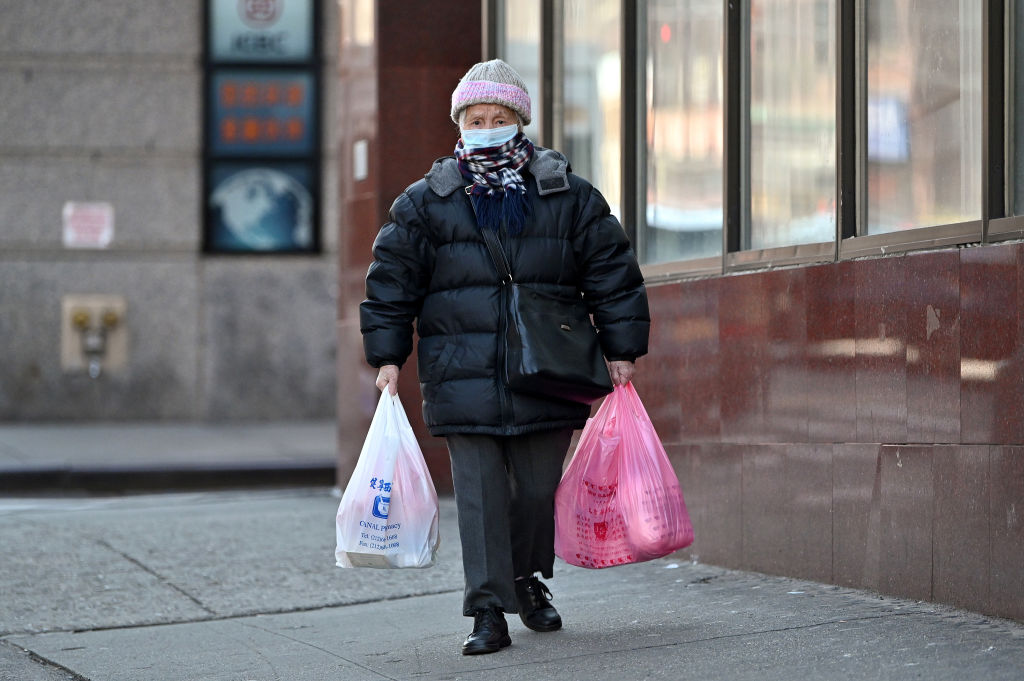
An elderly woman wearing a protective mask is seen walking on the sidewalk in Manhattan’s Chinatown on March 26, 2020 in New York City. (Dia Dipasupil / Getty Images)
Young people are becoming infected with the coronavirus at an alarming rate, but the disease it causes remains primarily a killer of the aged. In fact, 80 percent of the deaths from COVID-19 have occurred in people over sixty-five. Every decision about preventing and treating this virus is especially fateful for the old. The narrative that “we’re all in this together” ignores the elevated risk for minorities and those with underlying health problems, but the greatest predictor of who will die is age. Even among people of color, most of those who perish from COVID-19 are old.
The Centers for Disease Control and Prevention (CDC) are now urging states to prioritize vaccinating the elderly, but over much of the past year, there has been a striking reluctance to focus attention on them. It almost seems, given the widespread failure to follow prevention guidelines, that their deaths are regarded as natural. In fact, there is nothing natural about the catastrophic scale of this crisis. It is, to a great extent, the product of decisions that have placed old people in greater danger. Everything from the condition of nursing homes to the premature opening of businesses and the toleration of maskless gatherings has worked against their vital interests. Policy after haphazard policy has made it more difficult for them to avoid infection. The pattern in all these choices is hard to see, but its result is brutally clear.
If present trends continue, researchers predict that, by February, 450,000 Americans could die of COVID-19. If those deaths follow the same pattern as we’ve so far seen, that will mean 360,000 elders gone before the buds appear on trees. We may never know precisely how many of these deaths could have been avoided with an effective national response, but reliable estimates suggest tens of thousands might have been saved.