In Lenín Moreno’s Ecuador, Democracy Is in Danger
Following last year's popular revolt against IMF-backed reforms, Ecuador's neoliberal president Lenín Moreno has systematically pushed phony judicial processes to suppress opposition at the ballot box. The ban on leftist Rafael Correa's candidacy makes a mockery of the 2021 election — and raises worrying questions over the future of democracy in Ecuador.
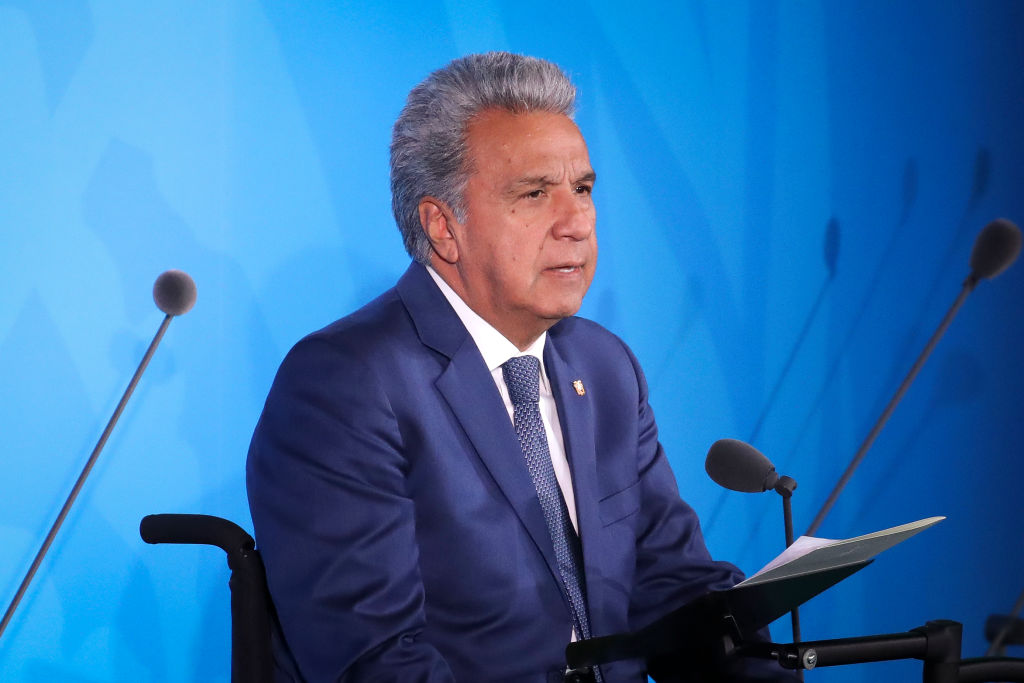
Ecuadoran president Lenín Moreno speaks at the United Nations in New York City, 2019. (Drew Angerer / Getty Images)
Ecuadorian president Lenín Moreno and his allies have gone to great lengths to prevent former president Rafael Correa and his political movement from returning to power.
In order to achieve this goal, the current government has persecuted opponents and barred candidates from running. Moreno’s authoritarianism has, so far, gone largely unnoticed internationally. With elections scheduled for February 2021, it is crucial that the international community keeps a vigilant eye on the Ecuadorian government’s persistent attempts at perverting the course of democracy.
The Moreno government’s main strategy has been to try to block Correa himself from being a candidate in the February 2021 elections. Correa’s legacy of reducing poverty and inequality in the context of high economic growth during his ten years as president (2007–2017) means that he and the political movement that he created still enjoy widespread popular support and represent the greatest threat to the new elite pact that Moreno has painstakingly consolidated.