Puerto Ricans Haven’t Stopped Organizing After Last Year’s Uprising
One year after Puerto Ricans ousted their governor in mass protests, the long-standing structures of political and economic oppression remain in place on the island. But the uprising proved the power of collective action — and Puerto Ricans have become more resolved to build democracy from below and challenge their colonial status.
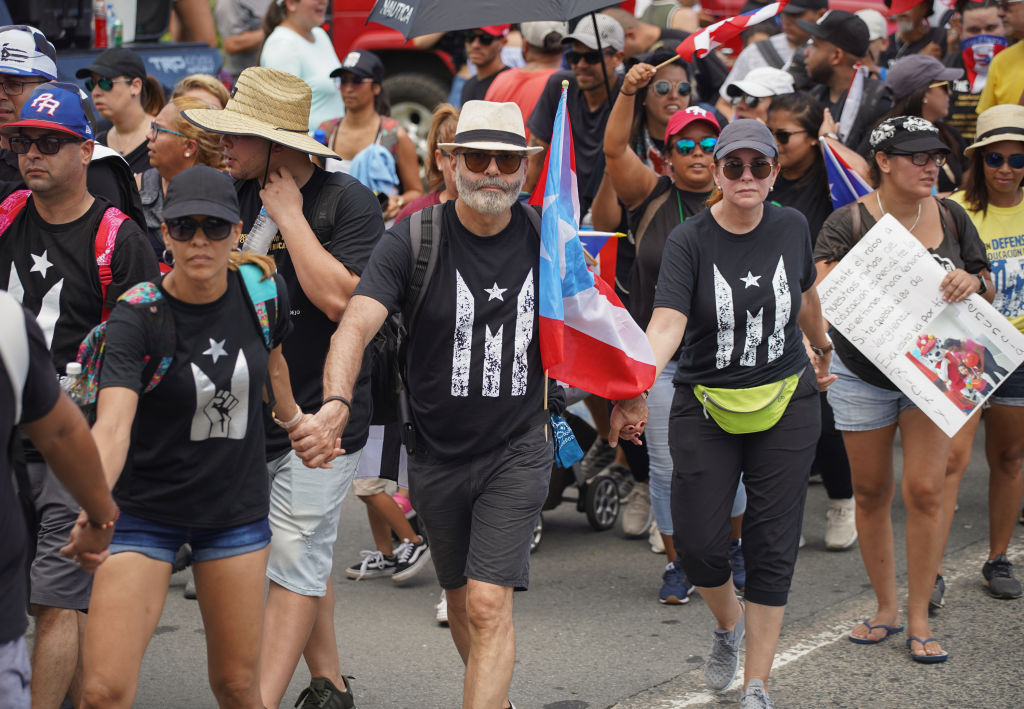
Demonstrators walk down the Las Americas Expressway, the biggest highway in Puerto Rico as part of a massive march on July 22, 2019 in San Juan. (Angel Valentin / Getty Images)
Last summer, hundreds of thousands of people mobilized in Puerto Rico to oust Governor Ricardo Rosselló. For a moment, as Rosselló bowed to popular pressure and stepped down, far-reaching social and political change seemed within reach.
A year later, much remains the same.
But while corruption, disaster mismanagement, and the ruling party’s policy agenda have stayed constant, the 2019 summer uprising changed Puerto Ricans and their political imagination. It made clear the power of collective action.