Medicare for All Is Better Than Union Health Care
A new report shows that union health plans, while better than employer-sponsored health care, pale in comparison to Medicare for All. The labor movement should take notice: union members would be better off with M4A than the health plans they have to fight so hard to protect.
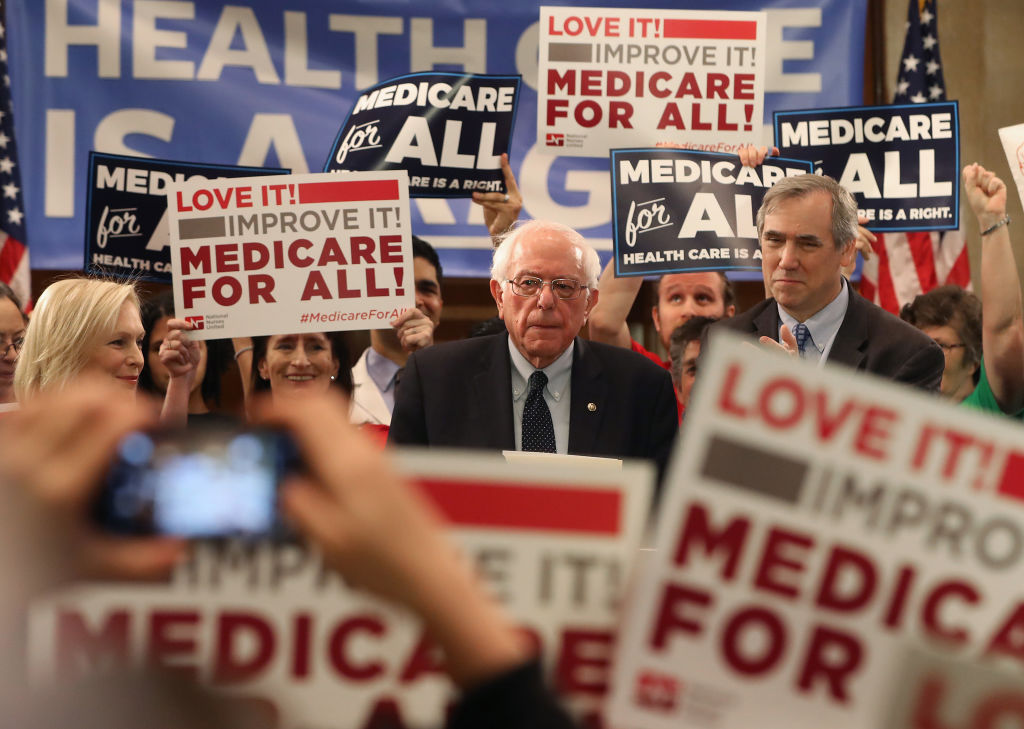
Sen. Bernie Sanders introduces health care legislation titled the “Medicare for All Act of 2019” during a news conference on Capitol Hill, on April 9, 2019 in Washington, DC. (Mark Wilson / Getty Images)
The 1947 Taft-Hartley Act banned radicals from union leadership positions, prohibited solidarity and wildcat strikes, and cleared obstacles to union-busting right-to-work laws. For these reasons, it’s rightly remembered for contributing to the atrophy of the labor movement. But Taft-Hartley also did something else that is less well-understood, and due for an honest appraisal. It created a whole new type of health care agreement: the multiemployer union health plan.
Today, nearly six million Americans are on such health plans. They work differently from employer-sponsored health plans and are generally superior. Through collective bargaining agreements, multiple employers agree to pay into a trust fund, which is then managed jointly by representatives from both the union and the companies. This usually results in better coverage for workers than plans that are unilaterally decided by penny-pinching bosses.
To hear Democratic Party politicians tell it, union health plans are the cream of the crop. So great is the Democratic establishment’s regard for them that you’d almost get the impression that this one provision alone made up for everything else in the anti-union Taft-Hartley Act.