How the Labour Party Lost the Chance of a Lifetime
Corbynism had a popular program — but not the popular insurgency it needed to fight for it.
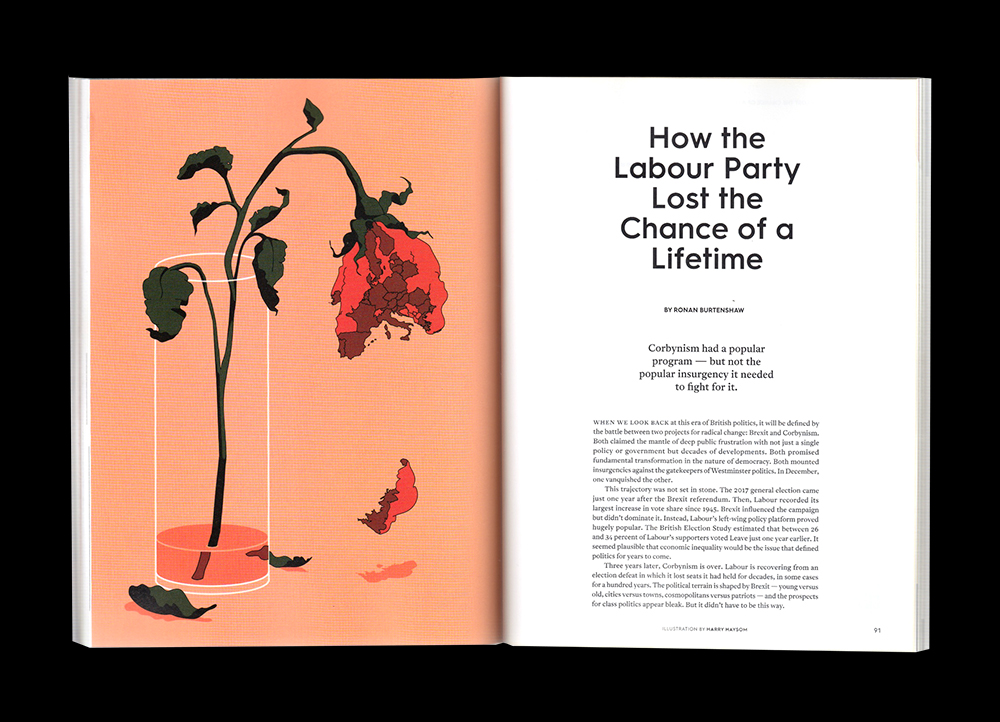
When we look back at this era of British politics, it will be defined by the battle between two projects for radical change: Brexit and Corbynism. Both claimed the mantle of deep public frustration with not just a single policy or government but decades of developments. Both promised fundamental transformation in the nature of democracy. Both mounted insurgencies against the gatekeepers of Westminster politics. In December, one vanquished the other.
This trajectory was not set in stone. The 2017 general election came just one year after the Brexit referendum. Then, Labour recorded its largest increase in vote share since 1945. Brexit influenced the campaign but didn’t dominate it. Instead, Labour’s left-wing policy platform proved hugely popular. The British Election Study estimated that between 26 and 34 percent of Labour’s supporters voted Leave just one year earlier. It seemed plausible that economic inequality would be the issue that defined politics for years to come.
Three years later, Corbynism is over. Labour is recovering from an election defeat in which it lost seats it had held for decades, in some cases for a hundred years. The political terrain is shaped by Brexit — young versus old, cities versus towns, cosmopolitans versus patriots — and the prospects for class politics appear bleak. But it didn’t have to be this way.