The Slow Dismantling of Australia’s COVID-19 Security Net
In March, Australia’s wage subsidy scheme and generous unemployment benefits stood out globally for their decent approach to the COVID-19 crisis. Now, as cases spike, those schemes are being eroded as government opts to push more people into insecure work.
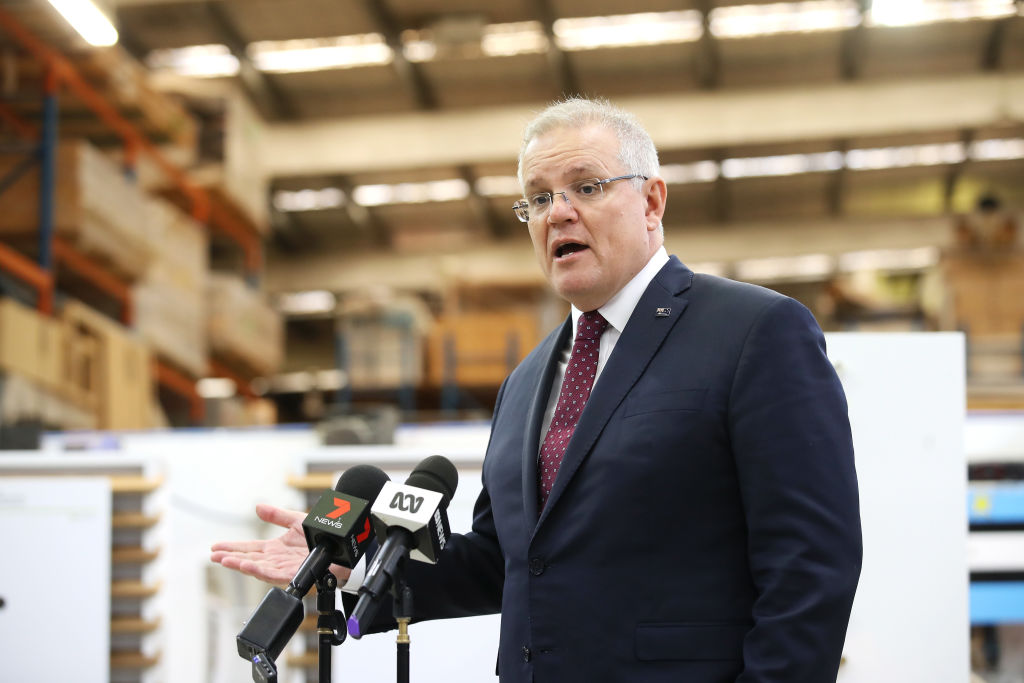
Prime Minister Scott Morrison is set to announce changes to the JobKeeper and JobSeeker programs in Australia this week. (Mark Kolbe / Getty Images)
On July 21, Scott Morrison’s Liberal-National government brought forward keenly anticipated announcements about Australia’s JobKeeper and JobSeeker payments, the wage subsidy and unemployment benefit that have kept millions from poverty during the worst depression in living memory. Morrison announced that although the payments will be extended beyond their previously legislated September deadline, the rates will be lowered and stricter eligibility criteria applied.
Under the new rules, from October to January 2021, eligible employers will be able to claim a two-tiered wage subsidy of $1,200 per fortnight for full-time employees. This will be reduced to $1,000 per fortnight from January to March 2021. For part-time employees working less than twenty hours a week, the payment will decrease to $750 per fortnight for the October to January period, and $650 per fortnight for the January to March 2021 period.
These changes seek to address the perceived “windfall” problem that arose under the previous JobKeeper rules, whereby some part-time workers received an increase in pay. Yet, then, as now, as many as 1.1 million casual workers and one million migrant workers remain excluded from the scheme.