The US’s Coronavirus Relief Measures Are Nowhere Near Enough
Coronavirus has had a devastating economic impact in the United States. Yet the richest country in the world has so far passed paltry relief measures.
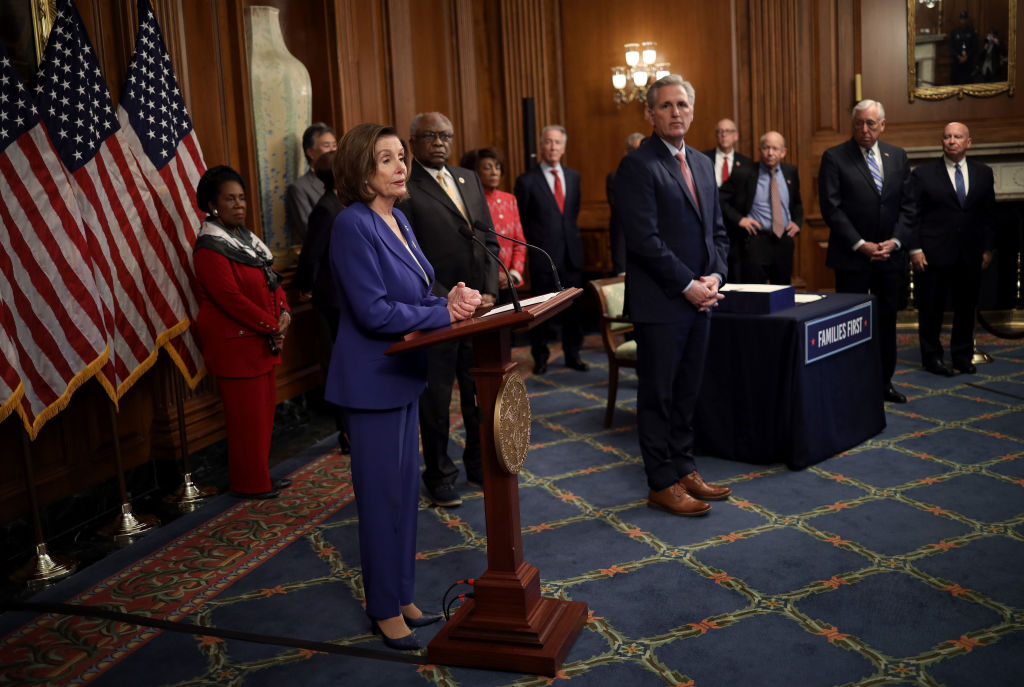
Speaker of the House Nancy Pelosi discusses the stimulus bill known as the CARES Act after the bill was passed at the US Capitol on March 27, 2020 in Washington, DC. (Win McNamee / Getty Images)
When coronavirus relief bills were being discussed a couple of months ago, I proposed the following non-exhaustive scheme:
Paid Leave
Create a one-month sickness allowance for those who need to take leave from work because they contracted the virus. Create a family leave benefit for those who need to take leave from work because they need to take care of family, e.g., due to school closures.
Unemployment Insurance
Expand unemployment benefits by replacing 100 percent of prior earnings up to $8,333 per month and by providing a minimum unemployment benefit, including to those not traditionally eligible for such benefits, of $1,063 per month.
Universal Payment
Pay $1,000 per month to every person for the duration of the crisis.
Corporations
Bail out companies that need help in exchange for equity. Set aside a large pot of money to buy publicly traded equities more generally.
The response we actually got was similarly patterned, but different in its particulars. Below I summarize that response and provide some commentary on its effectiveness.