Eugene Debs’s Independence Day Address
On July 4, 1901, socialist luminary and labor agitator Eugene V. Debs proclaimed in a fiery speech: "I like the Fourth of July. It breathes a spirit of revolution." We reprint the fiercely anticapitalist address here in full.
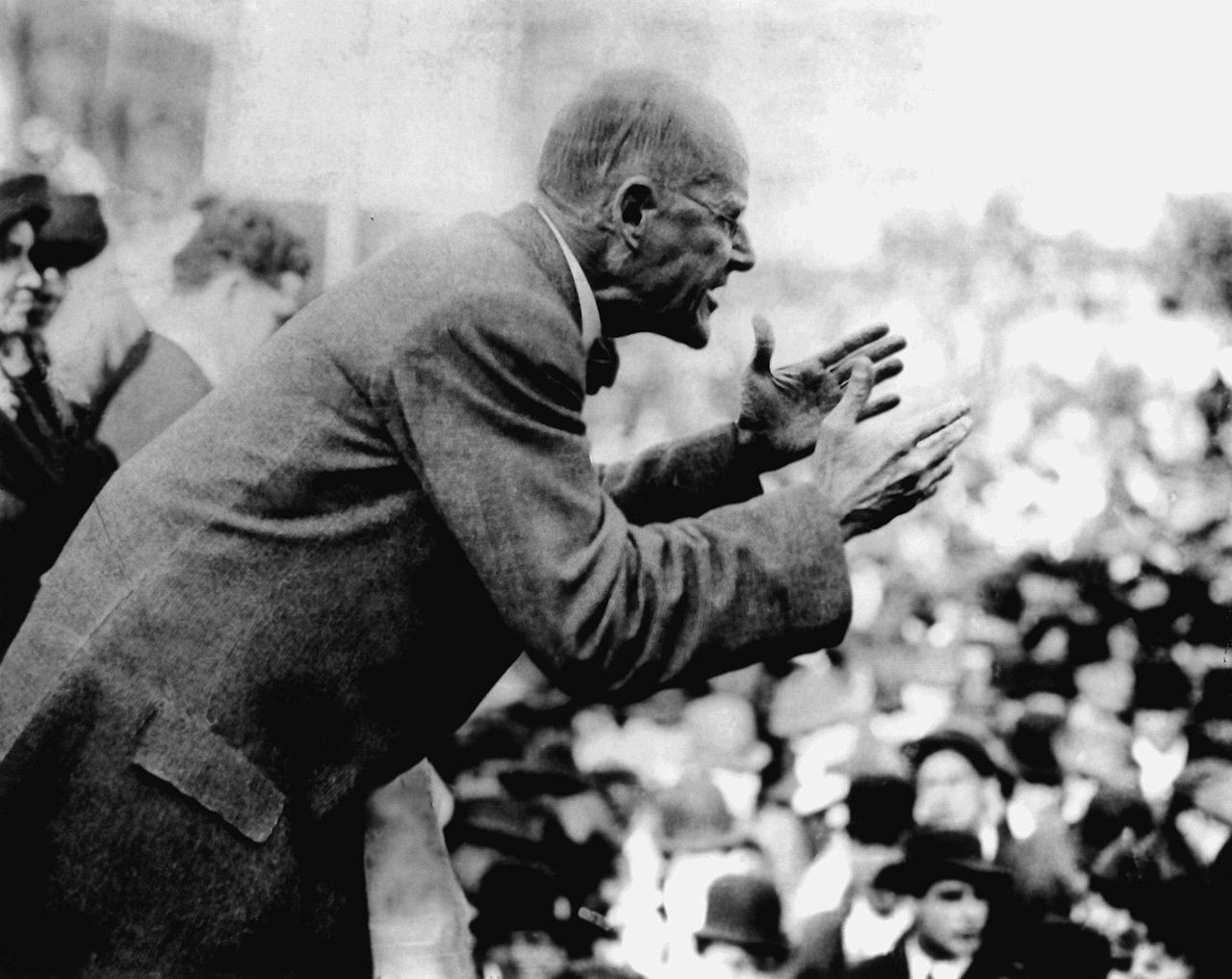
Eugene V. Debs delivering a speech, likely in Chicago in 1912. (Wikimedia Commons)
Ladies, Gentlemen, and Comrades: —
It is our good fortune, if we can boast, no other, to live in the most marvelous age of all the centuries, not contemplating the material progress of our time, which overwhelms and bewilders by its extraordinary achievements. Improvements have been accomplished as if by magic and we behold with wonder and awe the march of human conquest. The forces of nature which terrified primitive man, and before which the ancient world bent in superstition, have to a large extent been conquered and are the subject servants of man’s desire. In this march of progress the brain and heart have been expanded, the one shedding light and the other life, without which civilization would turn back upon its axis. Fortunately for man, everything is subject to change, and all change tends to the development of the race and the advancement of human institutions. Institutions crumble in this march of time. All of them have their periods of gestation, of birth, of development, maturity, decline, decay, and death. All of them come in their order. They fulfill their mission, they give birth to their offspring, and they pass away.
A little over a century ago the inhabitants of this country were not citizens. They were ruled by a foreign king. They petitioned for relief. Their petitions were disregarded. They objected to taxation without representation. Their protests were scorned. Finally they revolted. They issued the Declaration of Independence and enunciated the proposition that men are created equal. But the founders of this republic had only vague conceptions of democracy. The working class as we understand it today were not represented in the Constitutional Convention. The founders of the republic in declaring that men were created equal evidently meant themselves alone. They did not include the negro, who had been brought here against his will and had been reduced to a state of abject slavery. The institution of chattel slavery was already securely established at that time. It was founded in iniquity, yet it did not seemingly disturb the consciences of the founders of the republic. This institution was in conflict with the spirit of the Declaration, with the genius of free institutions, and yet it was incorporated in them. It steadily grew in power, and in course of time it controlled the country and the courts and the life of the people.