The Social Service Employees Union Was a Model of Public-Sector Unionism
In the 1960s, an upstart union of New York City social workers forged alliances with welfare recipients while fighting to improve public services at the bargaining table. They’re a model for public-sector unions today, which should be pushing for better services and struggling to democratize the state.
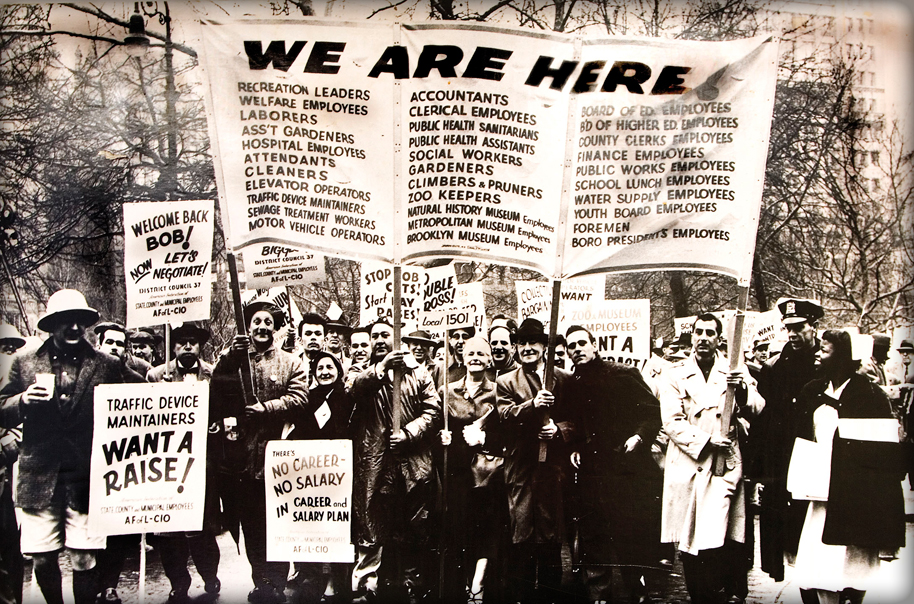
A District Council 37 strike. Photo courtesy DC 37
Unionization came late to the public sector in the United States. But when it finally did, it spread like wildfire. As unions won legal recognition and collective bargaining rights and consolidated their relationships with Democratic Party officeholders, union density in the public sector rose to around 40 percent by the early 1980s and has hovered near that level ever since.
This was an advance for public employees and the labor movement as a whole, particularly as private-sector unions withered under an intense assault by employers and anti-union politicians. But this process of incorporation also meant that the unions could substitute the support of public officials and government agencies for the collective action of their own members, a development that made them vulnerable to the relentless attacks of the last decade.
After smashing organized labor in the private sector, anti-union forces turned their attention to undermining labor’s public-sector strongholds. They have rolled up a string of major victories since the 2008 financial crisis, culminating in the Supreme Court’s 2018 Janus v. American Federation State, County, and Municipal Employees decision that imposed a “right-to-work” regime on public employment nationwide.