In Iraq, a Destroyed State Struggles to Cope With Coronavirus
- Joe Hayns
Since the 2003 war against Iraq, a massive 70 percent of the country’s health care infrastructure has been destroyed. As hospitals are besieged by victims of the COVID-19 pandemic, a state enfeebled by two decades of conflict is again at a breaking point.
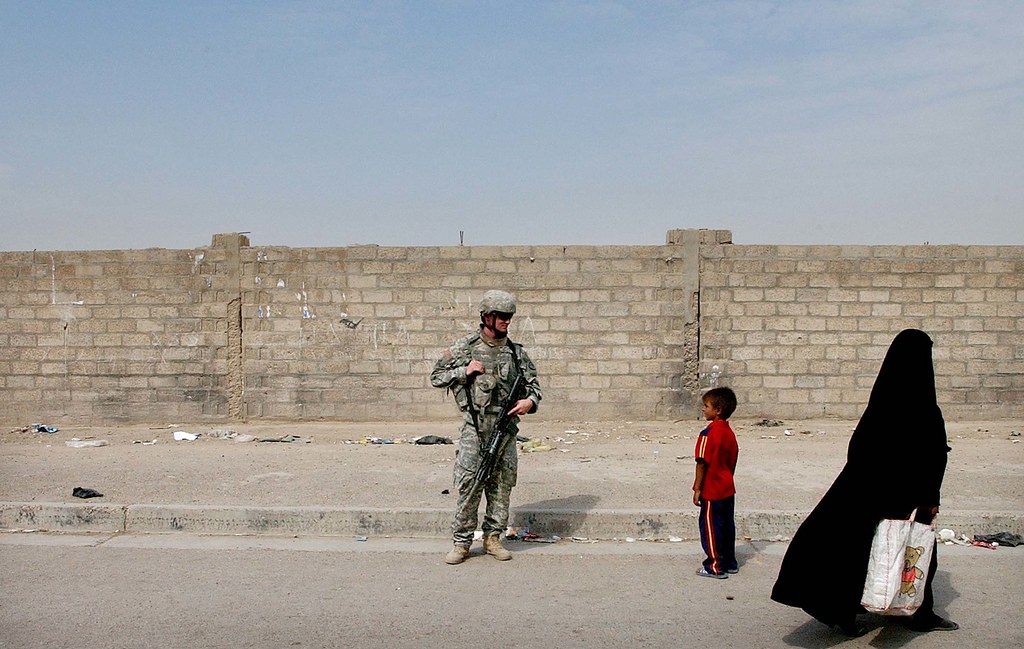
A US Army soldier and local Iraqis on August 20, 2007 in Baghdad, Iraq. (US Army / Flickr)
Even before COVID-19 became the main concern for the region, the Middle East was already traversed by multiple political, economic, and social crises — some of them structural rather than merely temporary or fleeting.
Nearly a hundred thousand (mostly American) foreign soldiers are stationed in the region. The state of Israel — meticulously destroying any possibility of a future Palestinian state — is no longer hesitating from military intervention in Lebanon, Syria, and Iraq.
Millions of people, forced to flee wars, are now living in refugee camps. Interconfessional fractures widen, and authoritarian regimes continue to rule, as if according to some inexorable destiny. Non-state groups attempt to convert their military gains into formal political power.