The Rogue State Is on the Rampage Again
The US has long been a lawless aggressor and a threat to peace, but in the past it at least tried to prettify its policies. By openly refusing to leave Iraq at the request of its government, Donald Trump has let the mask slip.
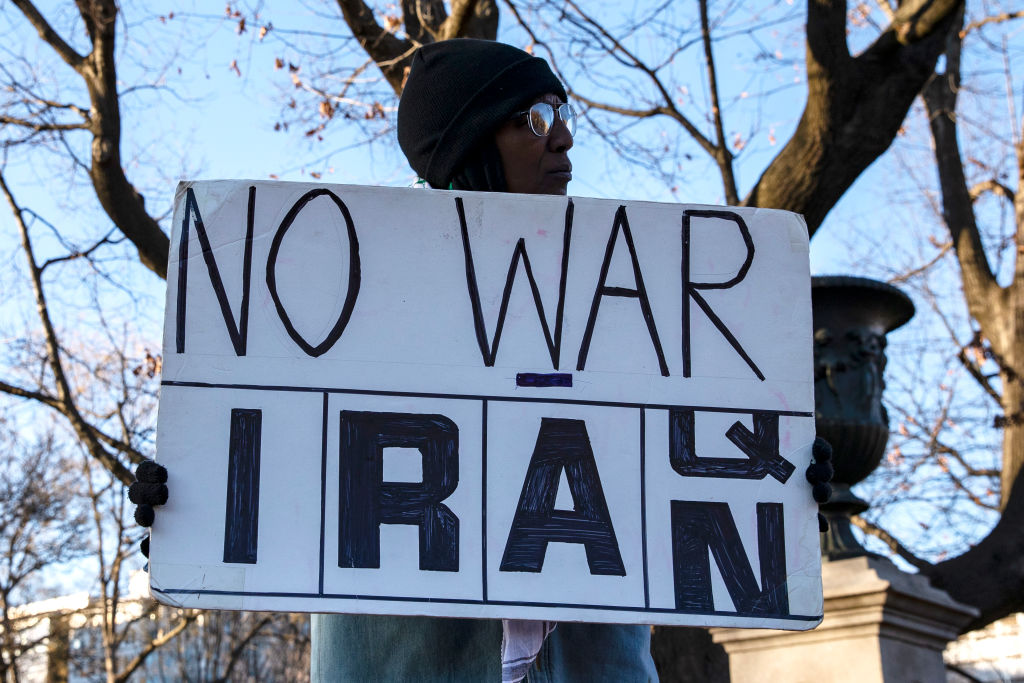
Linda Leaks, seventy-one, from Washington, DC, stands outside of the White House on January 8, 2020 in Washington, DC.Samuel Corum / Getty
It would mock history to say that Donald Trump was the first US president to violate Iraqi national sovereignty. Save for a brief interlude between 2011 and 2014 the United States has been militarily intervening in Iraqi affairs since the end of the Gulf War in 1991. At times that intervention has come at the request of the Iraqi government, as was the case in 2014 when the Obama administration deployed US forces back into the country to stem the onrushing tide of the Islamic State (IS). Most of the time, though, that intervention has come unrequested, the best example being the US invasion and subsequent occupation of Iraq in 2003.
But one of the most interesting aspects to the Trump presidency is the manner in which Donald Trump, in his simplistic approach to issues both foreign and domestic, has allowed the proverbial mask to slip and reveal the naked imperialism beneath. The president who openly boasts of committing war crimes while threatening to commit more and pardoning US service members who have already committed them, who has imposed brutal sanctions that are denying basic human needs to the Iranian people, and who talks gleefully about the US military as both gun runner and mercenary protection racket, has now made it as clear as possible that Washington regards Iraq as little more than a colony.
The January 3 US drone strike that assassinated Qassem Soleimani, commander of the Iranian Quds Force, and Abu Mahdi al-Muhandis, the deputy chair of Iraq’s militia umbrella organization, the Popular Mobilization Committee, outside of Baghdad airport was itself an act of supreme imperial hubris. Soleimani, the intended target, was a high-ranking official for a country with which the United States is not — at least officially — at war, making his assassination legally dubious. Muhandis, who may have simply been collateral damage, was a high-ranking official in the Iraqi government, ostensibly a US ally.