Sadr, Sectarianism, and a Popular Alternative
Recent elections in Iraq show that the country's voters are tired of a political system that produces only corruption and inequality.
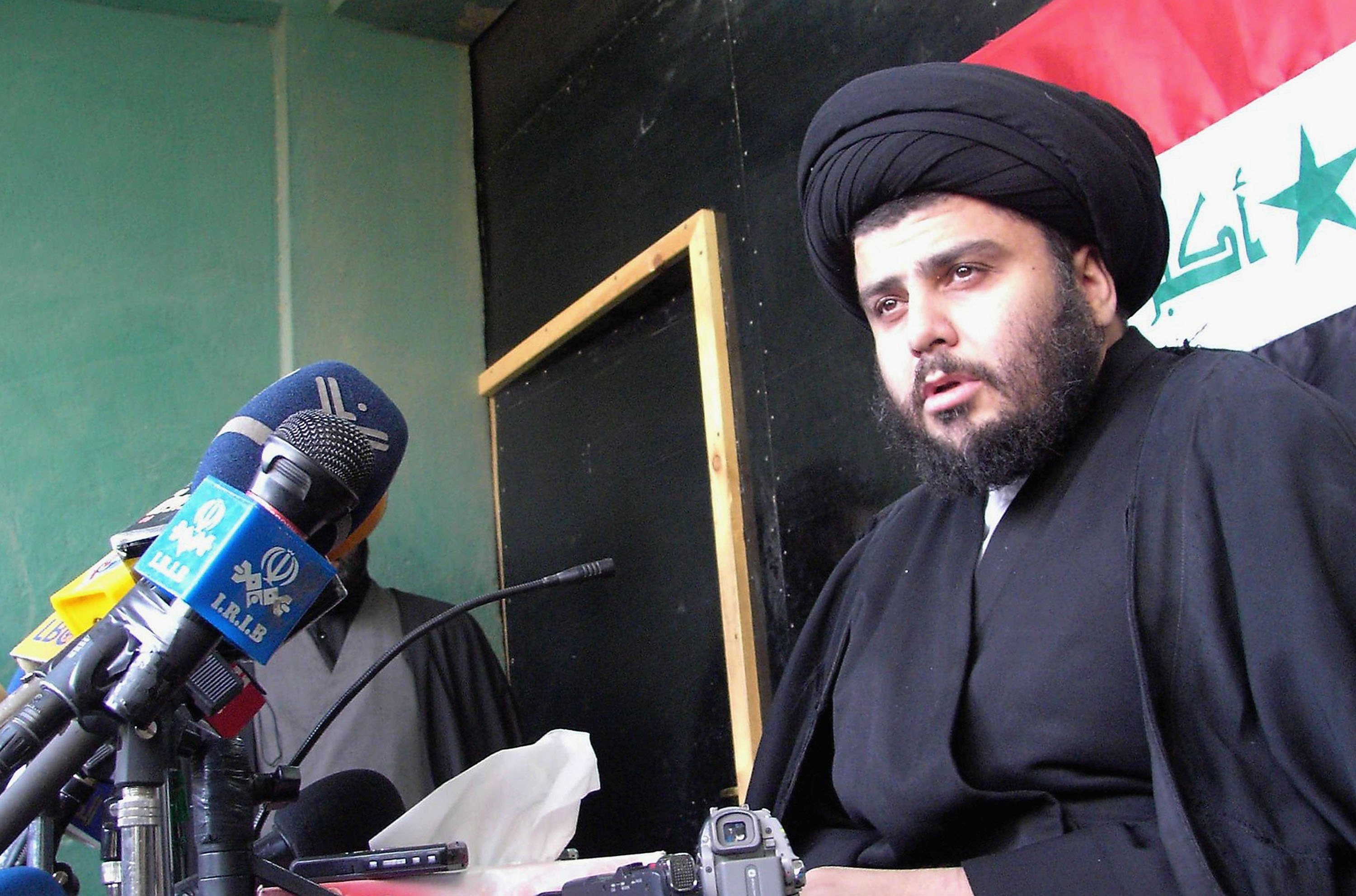
Iraqi Shi’a cleric Moqtada al-Sadr speaks to reporters during a press conference on March 13, 2006 in Najaf, Iraq.Saad Serhan / Getty
Last month, in the first Iraqi elections since ISIS’s defeat in Mosul, Sairoun, or “March for Reforms” — an electoral alliance led by Shi’a cleric Muqtada al-Sadr, the Iraqi Communist Party, and several other smaller groups — placed in first.
Sairoun was followed by Fateh Alliance, the political branch of Hashd al-Sha’bi (Popular Mobilization Forces), Iranian-backed, Shi’a Islamic fundamentalist militias; the Victory Alliance, led by current prime minister, Haider al-Abadi; and, finally, the State of Law Coalition, headed by former prime minister Nouri al-Maliki. Many members of parliament, some of whom had been in office since the first post-invasion elections in 2005, lost their seats. In total, 215 of 329 deputies in parliament are rookie legislators.
The election sparked a cascade of fraud accusations, particularly from prominent political figures who were unseated. The parliament has ordered a manual recount and the scrapping of all ballots cast by Kurdish security forces, internally displaced people, and diaspora voters. It has also voted to suspend the electoral commission and appointed nine judges in place of the commissioners. (The commission said it would appeal the move.)