Thaddeus Stevens, Revolutionary
Thaddeus Stevens was born on this day in 1792. A fierce, uncompromising opponent of slavery, he was a true American revolutionary.
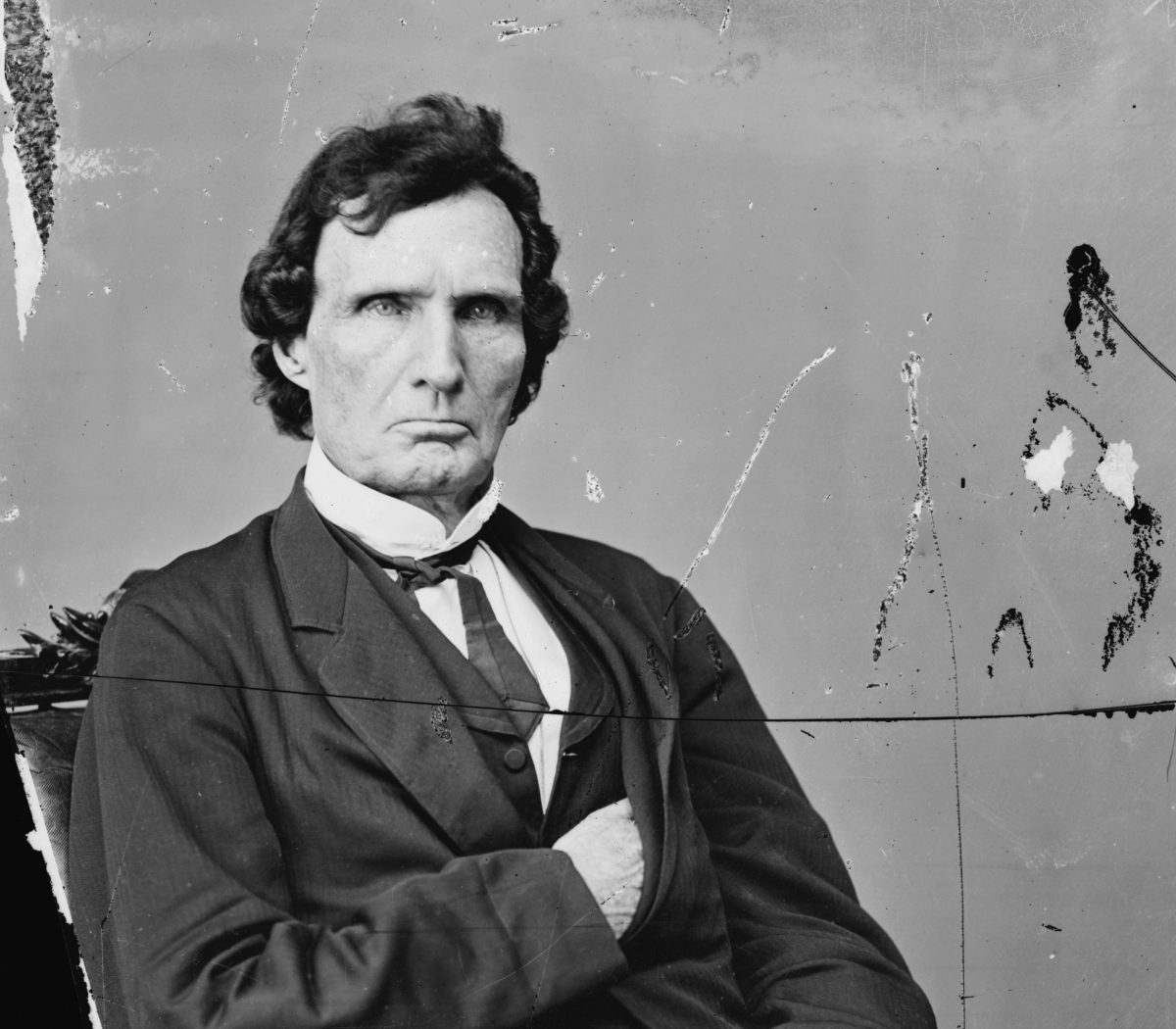
Thaddeus Stevens (1792–1868).
If Abraham Lincoln was, in historian James McPherson’s apt words, a “reluctant” revolutionary, Thaddeus Stevens was an eager one. “There was in him,” Frederick Douglass said of the Radical Republican and Pennsylvania congressman, “the power of conviction, the power of will, the power of knowledge, and the power of conscious ability,” qualities that “at last made him more potent in Congress and in the country than even the president and cabinet combined.”
An ardent believer in the “free labor” capitalist society then developing in the US North, Stevens strove throughout his life both to assist that economic system’s growth and to rid it and the nation as a whole of “every vestige of human oppression” and “inequality of rights.” At the national level, he worked above all to outlaw the ownership of human beings that was central to the economy, social relations, and politics of the Southern states. Accomplishing that task, he well knew, would be a huge undertaking. It would require radically transforming Southern society, stripping the wealthy planter class of both its most valuable property and the source of its social authority and political power.
Ruling classes, however, do not surrender their wealth and power willingly, passively, or peacefully. Slave state leaders verified that historical truth by launching an armed rebellion after his antislavery party, the young Republican Party, won the presidential election of 1860. When that rebellion led to war, Thaddeus Stevens, by then a Republican leader in the House of Representatives, was one of the first to grasp the conflict’s implications and the requirements of defeating the pro-slavery forces.