“In Moments of Crisis, Behind Every Moderate Liberal, There’s a Fascist”
- David Broder
Bolivia’s ousted vice president Álvaro García Linera told Jacobin about last Sunday’s coup d’état and the murderous violence now being unleashed against Evo Morales’s supporters.
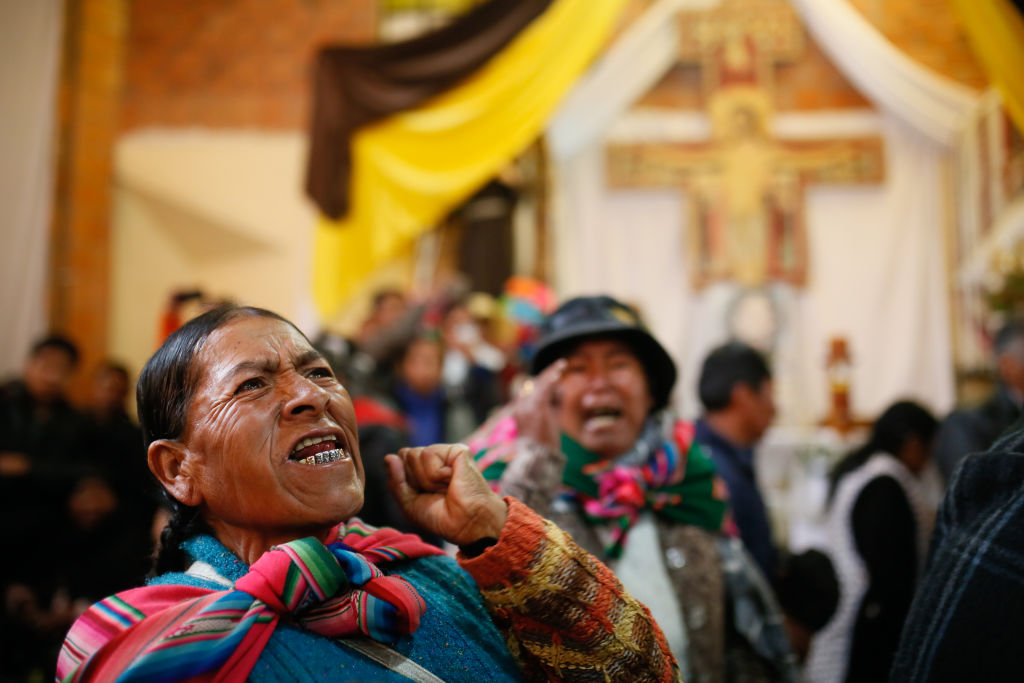
A woman gestures and shouts during the funeral of people killed during clashes between police and supporters of Evo Morales in the entrance of a major fuel plant, at San Antonio de Asis Church on November 20, 2019 in El Alto, outskirts of La Paz, Bolivia. Gaston Brito Miserocchi / Getty Images
Since its first election triumph in late 2005, Evo Morales’s Movement toward Socialism (MAS) has had unparalleled success in transforming one of Latin America’s poorest countries. In thirteen years of MAS government, a quarter of the population was lifted out of extreme poverty, the indigenous majority finally came to the heart of public life, and Bolivia enjoyed the region’s most consistently high GDP growth.
All this came to an end on November 10, as army chiefs forced President Morales to resign. After the weeks of intense right-wing mobilization following Morales’s October 20 election victory — with widespread but unevidenced claims that the vote was fraudulent — the far-right paramilitary leader Luis Fernando Camacho triumphantly marched into La Paz, promising to put “God back in the presidential palace.” Morales was forced to flee the capital, expressing his hope that his resignation could stem the opposition violence.
Yet even after the coup, the new authorities have pursued a violent campaign of vengeance against the ousted MAS — and even the populations whom its rule most benefited. Under self-proclaimed president Jeanine Áñez, street violence by white supremacist gangs has spiraled along with police and army repression of anti-coup protesters. Around two dozen people have been killed in the last week and half, as the violence against indigenous people and representatives of MAS and social movements intensifies.