A Coup in Bolivia, Yet Again
Bolivia is currently ruled by an unelected president, Jeanine Áñez, whose government is now responsible for nearly two dozen deaths and hundreds of injuries after Evo Morales’s overthrow. The situation is dire — but this is far from the first time the country has seen a coup in defense of Bolivia’s elites.
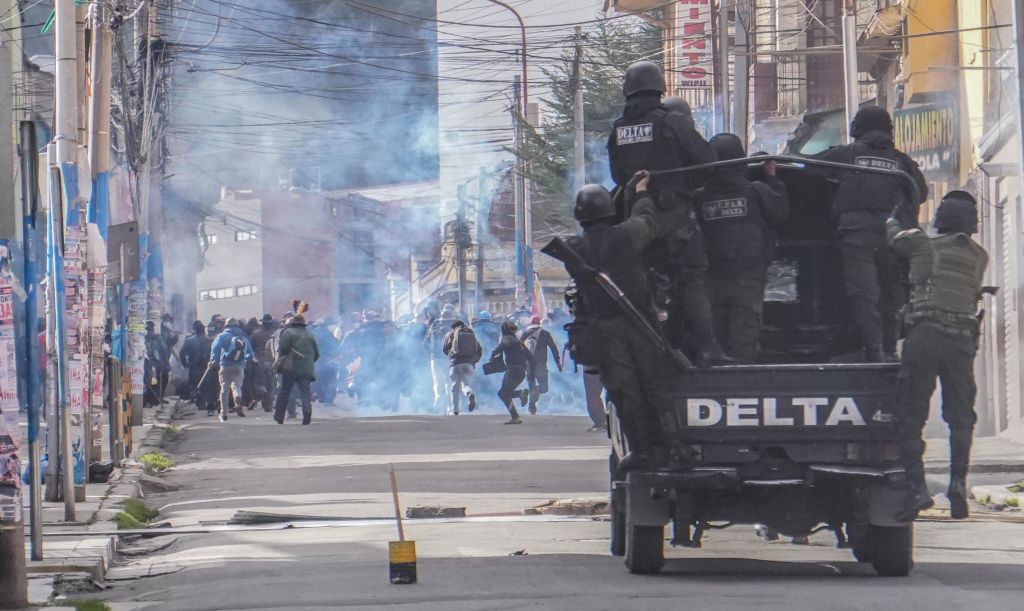
Miners from Colquiri receive tear gas from police during a protest on November 15, 2019 in La Paz, Bolivia. Javier Mamani / Getty Images
Extra-constitutional power transitions are frequently called “revolutions” by their authors and “coups” by those who resist. For a large plurality of Bolivians, last week’s forced resignation of President Evo Morales fits the latter category. Morales was elected to his third term in 2014 by the highest percentage of votes — 63 percent — of any free election since universal suffrage, and he was set to begin an unprecedented (for Bolivia) fourth term after polling in at 47 percent on October 20, more than ten percentage points ahead of his closest competitor.
Fueled by distrust among his detractors, however, the second place candidate refused to accept the results and was backed up by a dubious OAS (Organization of American States) report alleging electoral fraud. Independent analyses showed that alleged irregularities were statistically insignificant, but the report cast doubt on the election and justified for some Bolivian and foreign liberals what amounted to an extra-constitutional putsch. Responding to several days of middle-class protests, punctuated by violent right-wing attacks on electoral offices, some police abandoned their posts and joined the uprising.
The presidential palace’s tactical SWAT teams rose up on Saturday, November 9, parading with right-wing civic leader Luis Fernando Camacho through the streets. Rather than accept Morales’s agreement to hold fresh elections, their call for the president’s resignation was quickly echoed by similar statements on Sunday from the national police commander and the commander in chief. Citing a lack of police and military support, coupled with violent attacks on his family and his supporters, Morales resigned on Monday and, after spending the night with his supporters in the coca-growing region of Chapare, flew into exile on Tuesday.