Lyndon LaRouche’s March to Nowhere
The crises and anxieties of our age gave Lyndon LaRouche a lot of material to work with, to create his theories and control his followers. Now, his aimless and contorted reign has come to an end.
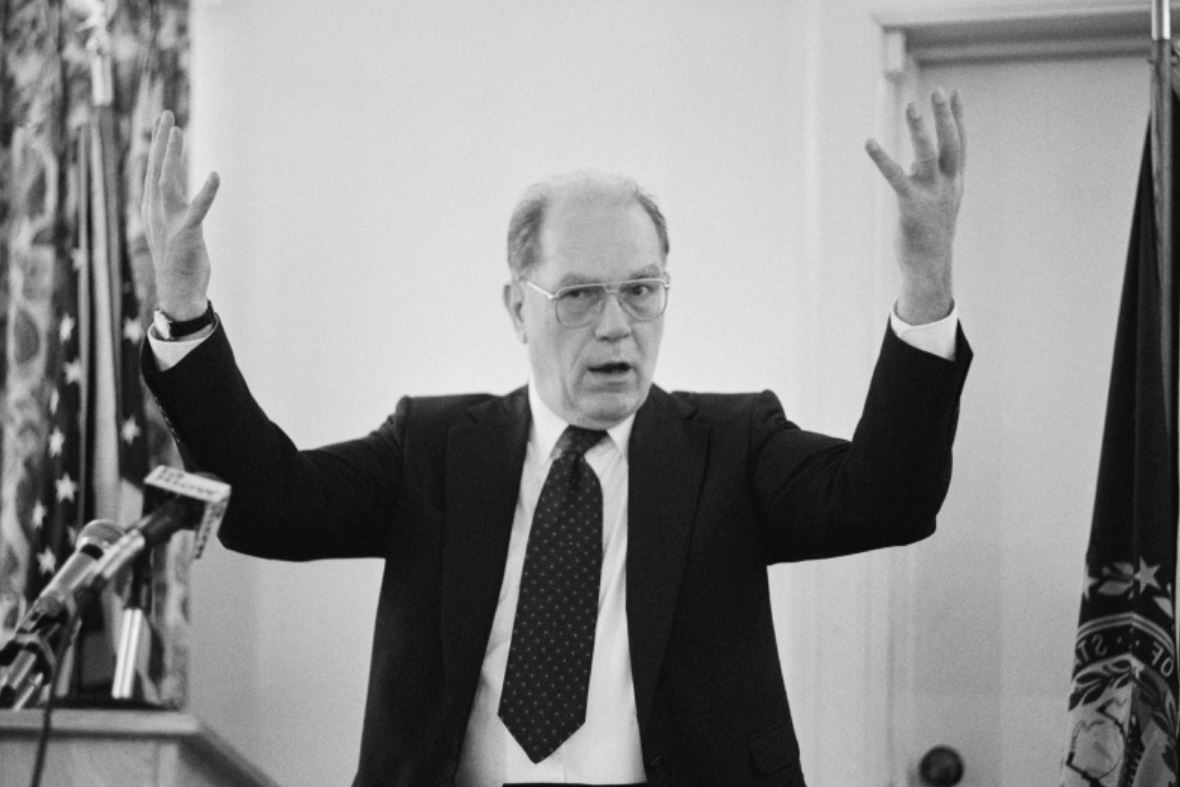
An international political tendency that first began to crystallize some fifty years ago is most likely coming to a close: the movement created by by the self-proclaimed genius and elder statesman Lyndon Hermyle LaRouche, Jr, who died Tuesday.
The seeds of LaRouche’s “movement” first took root in New York City and Philadelphia in the mid-1960s, when student radicals began to attend courses on Marxist economic theory by a lecturer known as Lyn Marcus. This had been LaRouche’s pen name for many years in the Trotskyist movement.
It has often been said that the pseudonym derives from “Lenin Marx,” though there is no evidence for this, and “Lyn” is simply a familiar contraction of his first name. LaRouche joined the Socialist Workers Party in Boston in 1949 and remained in it until 1965. Throughout his years of membership LaRouche followed in his father’s footsteps as a “time-motion” (efficiency) engineer hired to speed up production on assembly lines; he also worked as a consultant to companies on how to use computers to manage their accounts. His work left LaRouche plenty of time to write letters and documents on Marxist theory. The Trotskyist leadership seems to have ignored him, and various accounts by longtime members suggest that he was regarded as peculiar or perhaps mentally unbalanced.