Ryanair’s Secret
Europe’s biggest airline says it has outcompeted its rivals with its low fares. But its real success lies in slashing workers’ rights and crushing pilots’ unions.
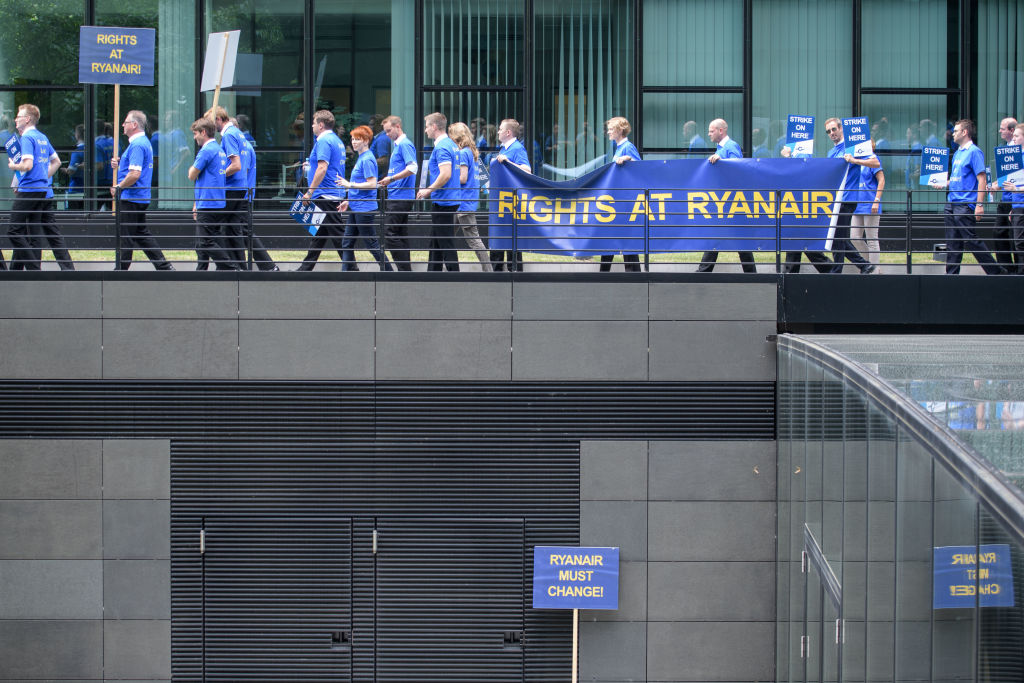
Pilots of discount airliner RyanAir gather at the headquarters of the pilots’ labor union Vereinigung Cockpit during a 24-hour strike by the pilots on August 10, 2018 in Frankfurt, Germany. Thomas Lohnes / Getty Images
In just three decades Ryanair has spread from one small secondary airport in Ireland to become Europe’s biggest airline. With thirteen thousand staff, it operates two thousand scheduled flights a day from eighty-seven bases across Europe. Underpinning its robust business model is its low fares. The ticket price covers a seat on the plane and a carry-on bag; all extra items, from checked-in luggage to a drink on board, come at a cost.
At the outset, many commentators argued that Ryanair would never last, but by the mid-2000s the Irish airline was bidding its competitors farewell. Raised to prominence by its rise, outspoken CEO Michael O’Leary has at every turn courted controversy, with the scope for polemics increasing as the airline expanded. He has used media to orchestrate PR stunts and cultivated a corporate culture where Ryanair’s brand is synonymous with highjinks.
All attempts to question this narrative or Ryanair’s culture are met head-on, including through merciless litigation. O’Leary portrays pilots’ trade unions as mere proxies acting on behalf of envious competitors who seek to undermine Ryanair’s edge. Last February he told investors that the unions are a “mob whose day is largely dead.” Over three decades Ryanair has worked hard, and largely succeeded in evading and frustrating their efforts.