The World’s Toughest Job
“The perfect mother” is a cudgel to cut down the flesh-and-blood variety.
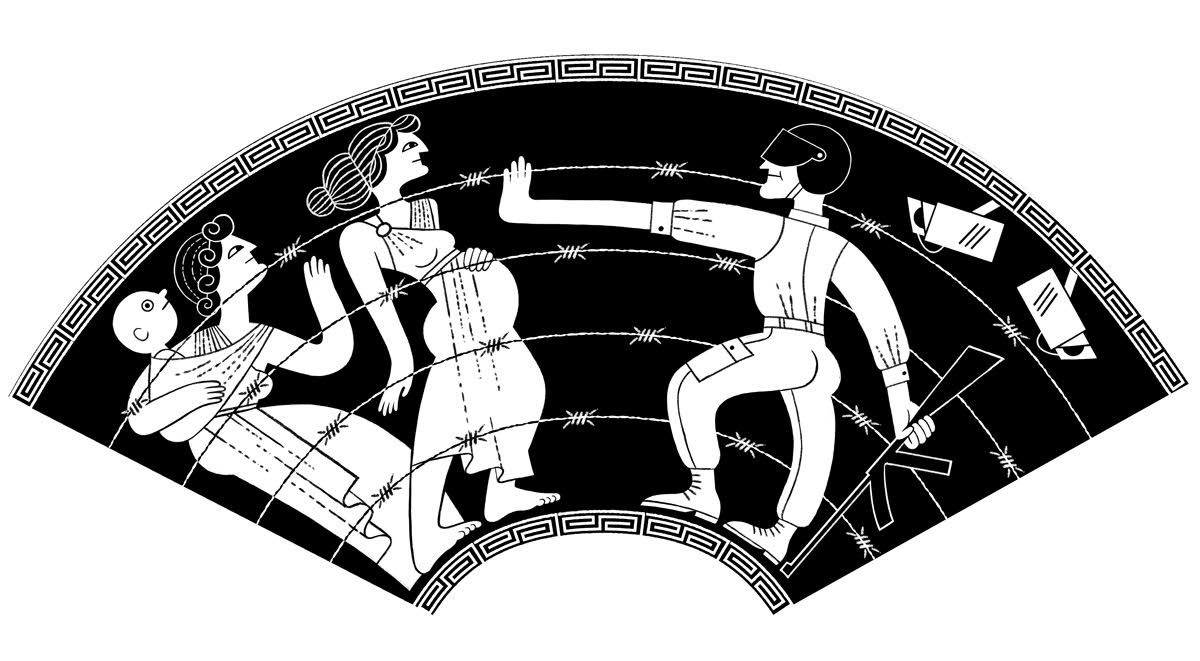
Illustration by Esther Aarts
In 2014, the advertising firm MullenLowe launched a campaign, “World’s Toughest Job.” The ad firm listed a fake job, “Director of Operations,” in newspapers and online, and held interviews with a variety of hopefuls. The inter-viewer then went over an extensive roster of requirements: working on one’s feet for most of the day, no breaks, excellent negotiation skills, availability to work through the night, increased workload on holidays, and, the pièce de résistance, “the position is going to pay absolutely nothing.” The interviewees look appropriately eager, then surprised, then incredulous. Billions of people already do this job, the interviewer says: “Moms.” Cue the piano and strings. “Moms are awesome!” one of the interviewees shouts after the reveal.
Probably unintentionally, “World’s Toughest Job” zeroes in on the conflicted nature of motherhood. Just how selfless are those late nights with a sick child and hours spent pushing swings? As we fixate on the obviously contrived figure of mother-as-cheerful-martyr — the mother we want to remember — what levels of their resentment, pride, boredom, and rage do we suppress or refuse to acknowledge? Expressions of these motherly affects are allowable only in the tiniest doses, or else they make us squeamish.
In her latest book, Mothers: An Essay on Love and Cruelty, Jacqueline Rose examines these complex dimensions of motherhood. Her ambi-tion thunders in its opening question: “What are we doing — what aspects of our social arrangements and of our inner lives, what forms of historic injustice, do we turn our backs on, above all what are we doing to mothers — when we expect them to carry the burden of everything that is hardest to contemplate about our society and ourselves?” Striving towards an answer, Rose’s text ranges across sensationalist headlines about migrant mothers in the British tabloid the Sun, ancient Greek tragic drama, the works of Edith Wharton and Sylvia Plath as well as their relationships with their mothers, and the fiction of Elena Ferrante, Simone de Beauvoir, and Adrienne Rich, to name a few.