Claude Lanzmann: A Critical Appraisal
“Shoah” filmmaker Claude Lanzmann, who died this month, forever changed the world’s understanding of the Holocaust — for better and for worse.
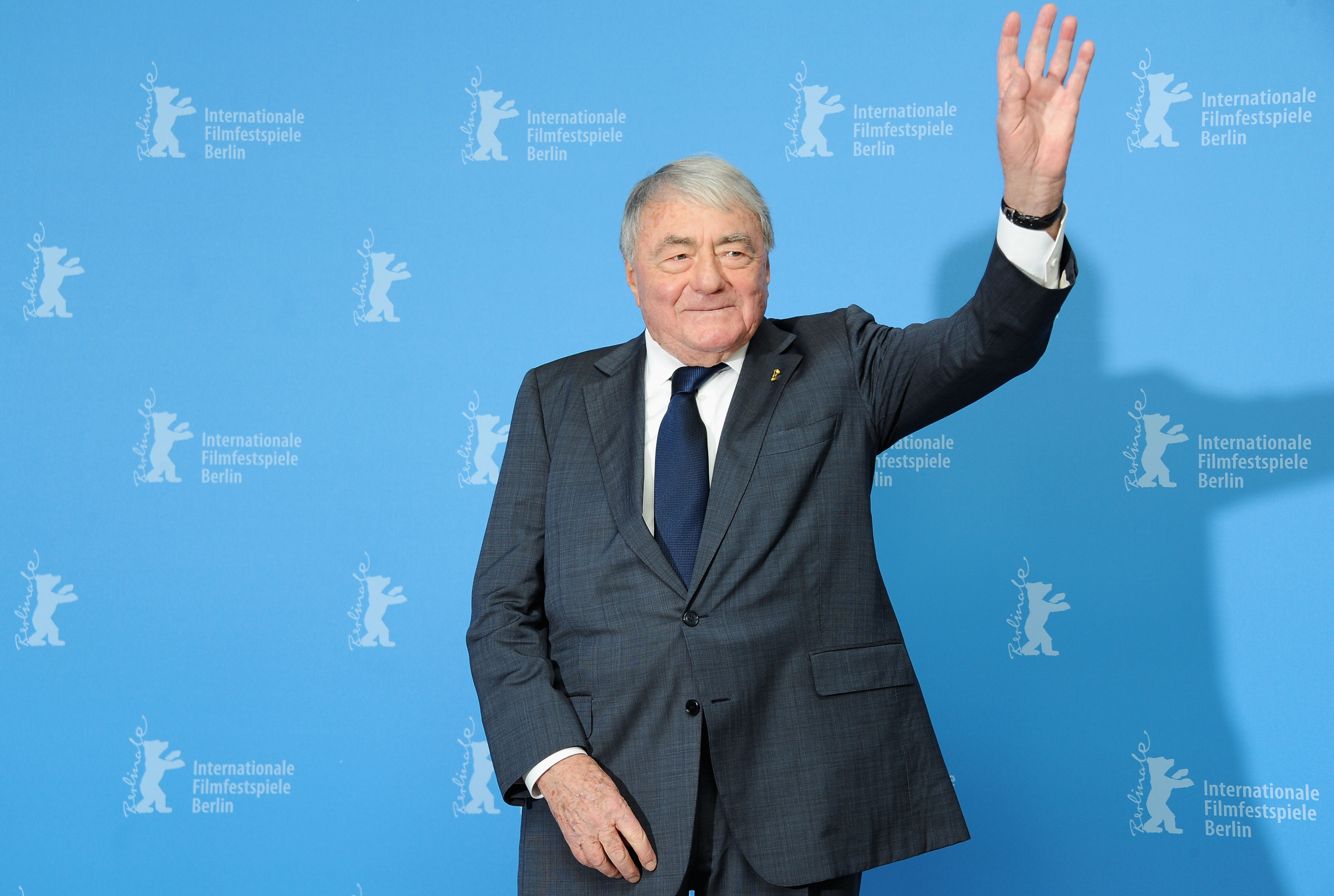
Claude Lanzmann attends the 63rd Berlinale International Film Festival at the Grand Hyatt Hotel on February 14, 2013 in Berlin, Germany.Pascal Le Segretain / Getty
The interminable list of eulogies celebrating Claude Lanzmann since his death — among which we find a significant number of conservative statesmen, intellectuals, and former culture ministers — raises some justified warnings about the life and work of this great filmmaker. Indeed, his canonization was already complete more than thirty years ago, when his masterpiece Shoah was released, and he spent the following decades managing his iconic image in the era of commemorations and the triumphant rhetoric of human rights. His work powerfully contributed to this historical turn which rescued the victims of the Holocaust from the numbness of oblivion and transformed them into the true heroes of the twentieth century. But it is difficult to imagine a personality as far from an innocent victim as Claude Lanzmann.
He was a fighter who strongly defended his convictions and devoted his impressive energies to multiple — not all of them very noble — causes. His arrogance, narcissism, and megalomania, as well as his intolerance and contempt for his critics were notorious, as was his passion for life. Some obituaries depict him as “a man of boundless, Balzac-like appetites” (New York Times), and “Gargantuan” (Libération). “I am neither indifferent to, nor weary of, this world; had I a hundred lives, I know I would not tire of it,” he wrote in The Patagonian Hare (2009), his autobiography. He “made a novel out of his life,” the obituarist of Le Monde pertinently writes, and there is no doubt that he lived intensely.
Beyond his conspicuous propensity for self-celebration and the exhibition of his remarkable adventures as a fighter, journalist, traveler, filmmaker, lover, sportsman, and adviser of prominent people, his memoirs make for a fascinating book. One may legitimately think that he exaggerates his role in the French Resistance under Vichy and German occupation, but it is a fact that he entered the antifascist struggle at seventeen and joined the Communist Party as a young man. In 1952 he met Jean-Paul Sartre, who asked him to write for Les Temps Modernes, a journal which he would edit after the death of Simone de Beauvoir. A convinced anticolonialist, he supported the FLN during the Algerian War and in 1960 signed the famous “Manifesto of the 121” that endorsed the independence struggle, denounced the torture systematically practiced by the French army, and called for conscripts to mutiny. One year later, he organized a meeting in Rome between Sartre and Frantz Fanon, already affected by leukemia and close to death, which resulted in an impassioned preface by the French philosopher to The Wretched of the Earth.