Revisiting the Life and Intellectual Legacy of Primo Levi
The author, anti-fascist partisan, and Nazi death camp survivor Primo Levi died on this day in 1987. His life and the cautious Enlightenment ideology he advanced in his work, Enzo Traverso writes, told the story of the twentieth century and its battles.
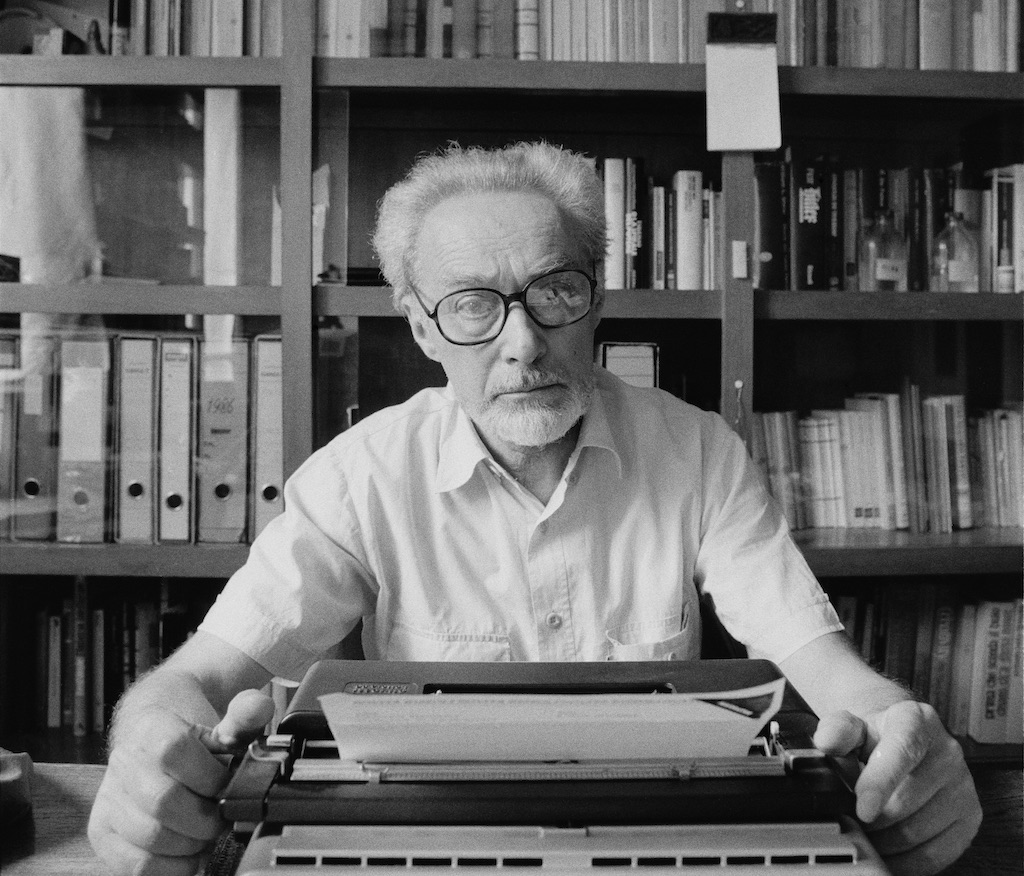
Primo Levi at his home in Rome, 1986. (Gianni GIANSANTI/Gamma-Rapho via Getty Images)
It would be banal — and nevertheless true — to emphasize how much we miss the voice of Primo Levi today, in times of rising xenophobia, racism, and far-right movements, at a time in which public intellectuals have almost disappeared in Italy. But lamentation was never Primo Levi’s style of thought, and is best avoided.
The destiny of classics is to be permanently reinterpreted, and Levi does not escape this. There are, however, certain misconceptions concerning his legacy. His relation to Enlightenment thought, his definition as a Jewish writer, and, last but not least, Levi’s role as a literary witness of the Holocaust — a word he disliked and with which today he is completely identified — have been misconstrued in recent decades.
A Critical Enlightener
Over twenty years ago, the Italian philosopher Giorgio Agamben wrote Remnants of Auschwitz, a remarkable book built on a sort of posthumous dialogue with Primo Levi, notably through a rereading of his last essay, The Drowned and the Saved (1986). Drawing on Levi, Agamben proposed a vision of the extermination camps as the secret law of Western civilization and the “naked life” of the deported (the “Muselmann”) as the modern expression of its underlying paradigm, homo sacer.