The Young Marx
The Young Karl Marx is a nuanced and surprisingly accurate portrait of the revolutionary as a young man.
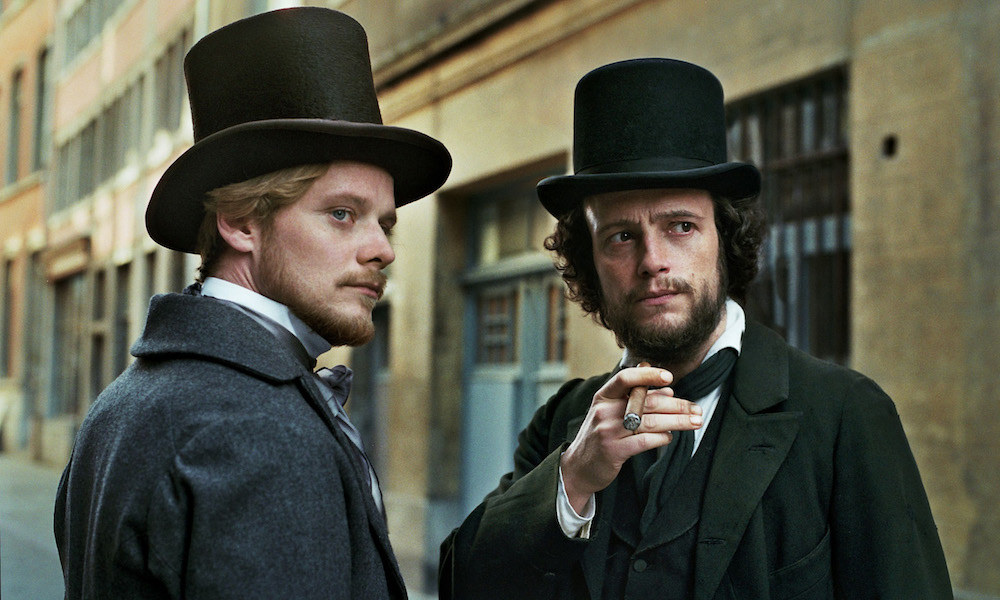
A still from The Young Karl Marx. Cineuropa
Released last year but receiving as yet very little English-language press coverage, Der Junge Karl Marx is a nuanced and surprisingly accurate portrait of the revolutionary as a young man. That said, I cannot vouch for the chase scene.
Regarding which, more anon. First a couple of circumstances that bode well for the film’s chances of reaching a wider audience once The Young Karl Marx (the title I saw it under at a film festival recently) becomes available on DVD and via streaming. Its director is Raoul Peck, the Haitian filmmaker whose I Am Not Your Negro, a documentary about James Baldwin, was nominated for the Oscars last year. And the timing is good: this coming May 5 will mark the two-hundredth anniversary of Marx’s birth. Add, say, the findings in World Bank report released this week, The Changing Wealth of Nations 2018, and the potential for interest in the film looks promising. Over the past two decades, global wealth grew “grew an estimated 66 percent,” the report says, “from $690 trillion to $1,143 trillion in constant 2014 US dollars at market prices,” while “per capita wealth declined or stagnated in more than two dozen countries in various income brackets.”
If anything, those figures understate the gap. It was defined more starkly two years ago by Oxfam: “the richest 1 percent have now accumulated more wealth than the rest of the world put together. . . . Meanwhile, the wealth owned by the bottom half of humanity has fallen by a trillion dollars in the past five years.”