Labour Against Empire
In 1922 communist militant Shapurji Saklatvala was elected on a Labour Party ticket, becoming the first MP of color in the party’s history.
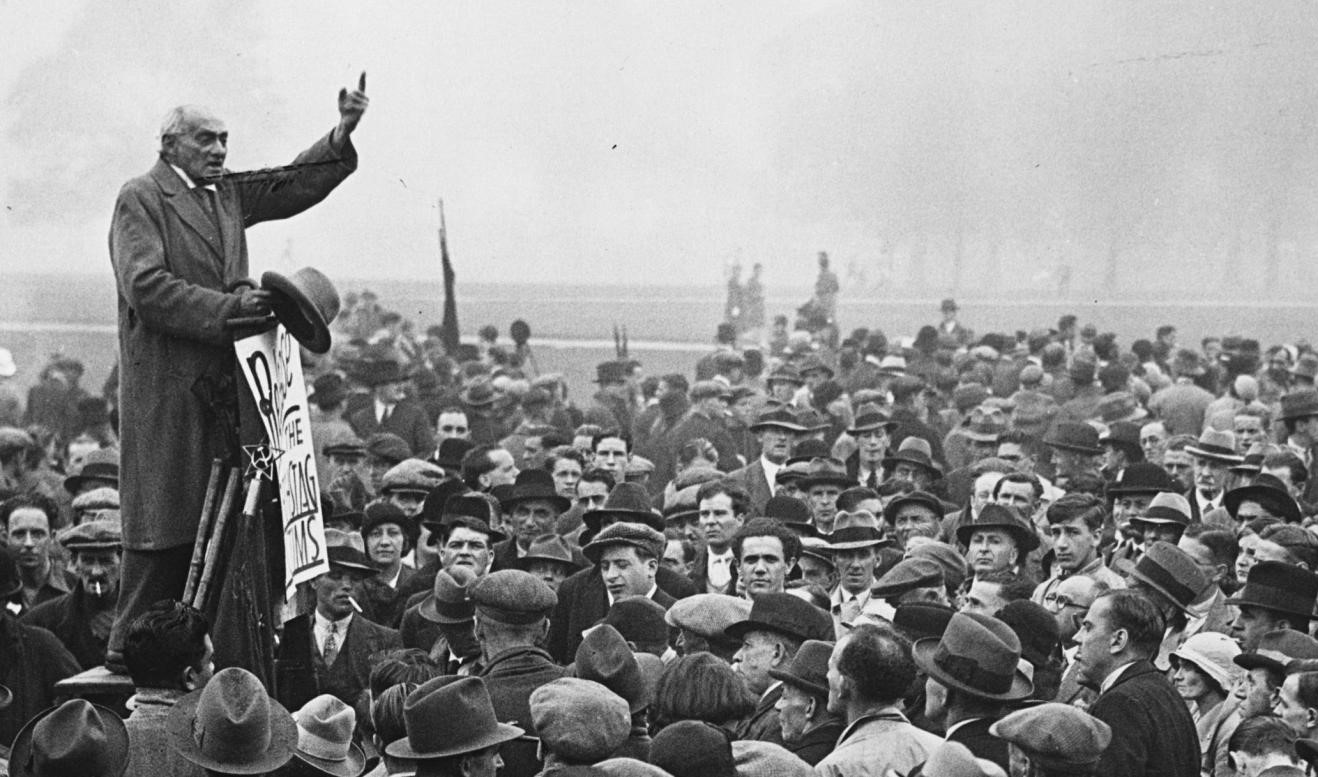
Addressing crowds at Speakers’ Corner in Hyde Park, Communist MP Saklatvala Shapurji calls for the release of the Reichstag Fire suspects in Germany.
Shapurji Saklatvala was the Labour Party’s first MP of color. A largely forgotten figure today, he was a card-carrying member of the British Communist Party and champion of both colonized peoples and the global working class. Sitting awkwardly in the history of the British left, Saklatvala offers an example of an anti-imperialist parliamentarian agitating at the heart of empire.
A lone voice in the halls of Westminster, Saklatvala saw no contradiction between the interests of British workers and those elsewhere. The achievement of socialism depended on the victory of both. “Of course, socialism means the destruction of the British Empire,” Saklatvala wrote in a pamphlet from 1926. As the ghost of the colonial past continues to cast its shadow on Britain’s political and cultural life, Saklatvala’s example offers lessons to new generations of socialists intent on reimagining Britain’s place in the world today.
Path to Parliament
Sharpuji Saklatvala was born in Bombay on March 28, 1874, the son of a wealthy Parsee merchant. His uncle was Jamsetji Tata, the owner and founder of India’s largest commercial empire. Clashing with his family over the direction of the business and with a growing political consciousness, he was forced to depart for Britain in 1905. Saklatvala slowly became more politicized, joining the Independent Labour Party (ILP) in 1909. Rajani Palme Dutt — one of Britain’s leading twentieth century black British intellectuals — described his friend’s conversion to international socialism: