An Uncommon Historian
Eric Hobsbawm wasn’t just a historian of the twentieth-century communist movement: he was part of it.
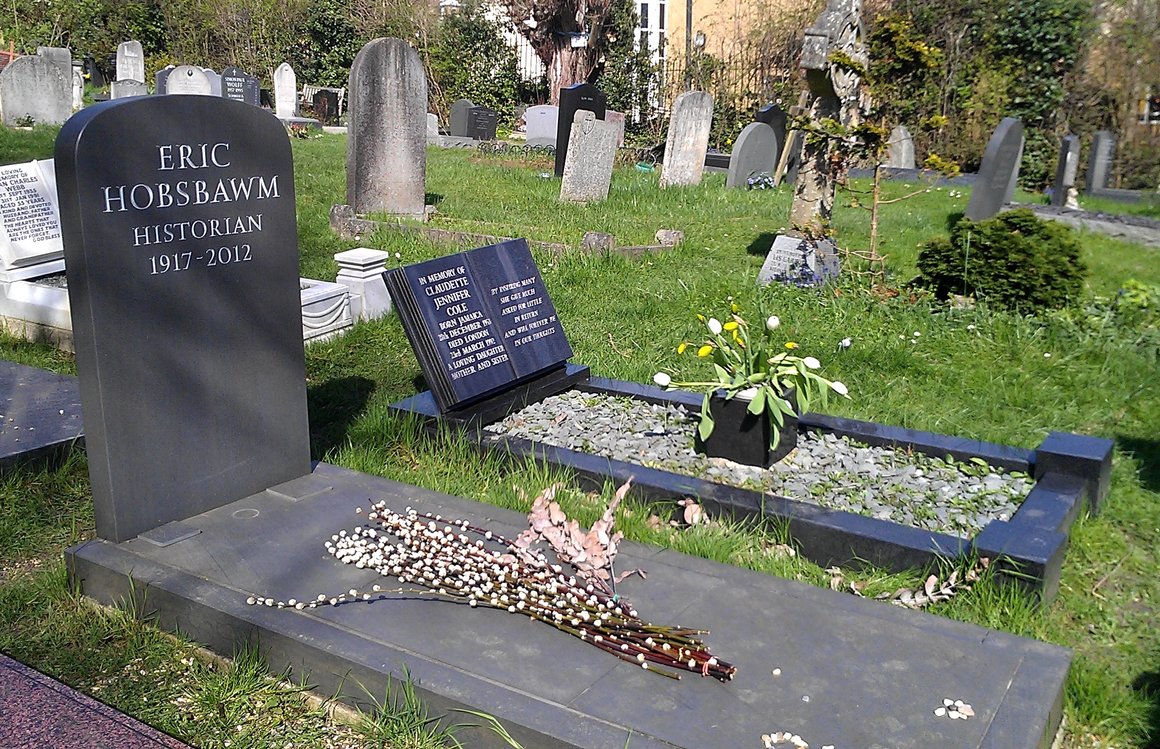
The grave of Eric Hobsbawm, located in the East End of Highgate Cemetery in the London Borough of Islington, March 25, 2017.Ethan Doyle White / Wikimedia
January 25, 1933 saw the last demonstration before the Nazi seizure of power in Germany. Countering the Nazis’ provocative march in support of fascist “martyr” Horst Wessel three days earlier, 130,000 Communists advanced past Liebknecht House on Berlin’s Bülowplatz, as temperature hit -15 °C.
In the biting frost and cutting wind, workers and the unemployed in dingy coats, thin jackets, and tattered shoes filed past the Communist Party headquarters with clenched fists, shouted slogans, and marching bands. But this was to be the party’s funeral oration. Adolf Hitler was proclaimed Chancellor on January 30, sparking a wave of arrests and executions that many of the marchers would not survive.
A fifteen-year-old Eric Hobsbawm — dressed in his blue mackintosh with makeshift winter padding sown inside — was among the workers as they sung the Internationale and Auf, auf zum Kampf, zum Kampf. Until his last days he kept the tattered song sheet of the verses he had once sung with his comrades from the Socialist School Students’ League.