The Tata Group Is Everything Wrong With Indian Capitalism
The megacorporation Tata has shaped Indian capitalism for 150 years. Despite its best efforts to sustain an image as an ethical company, Tata's roots in war profiteering and the opium trade, and its sophisticated suppression of worker organizing, is testament to the fact that "ethical capitalism" is only ever a contradiction in terms.
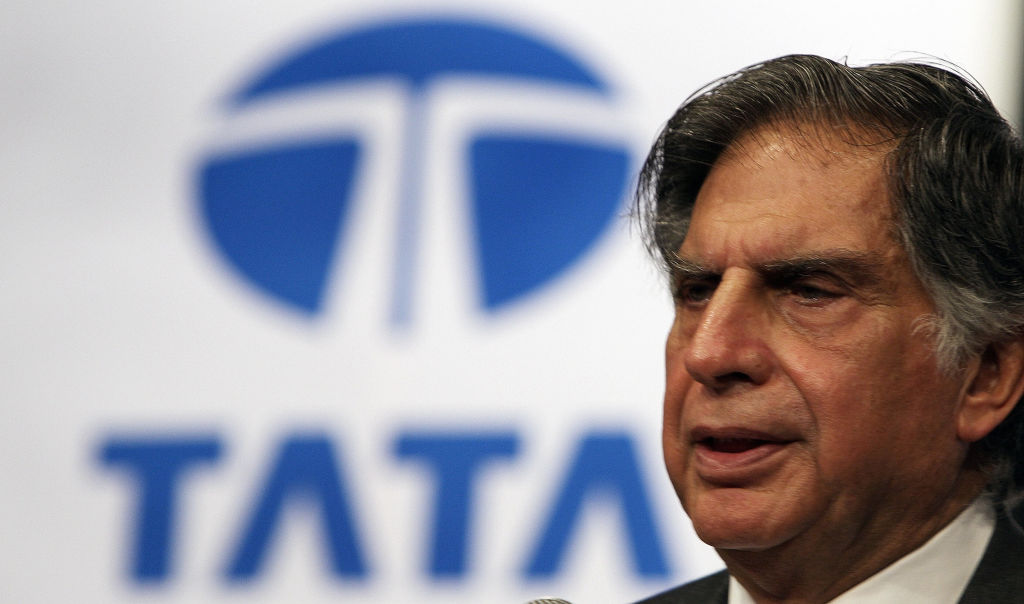
Ratan Tata, chairman of the philanthropic wing of Tata Group and former CEO, speaks in Mumbai in 2008. (Indranil Mukherjee/AFP via Getty Images)
There is a persistent legend about the origins of the ornate, five-star Taj Mahal Palace Hotel in Mumbai (formerly Bombay), India’s financial capital. The hotel opened in 1903, when British colonial rule in India was at its peak. The genesis of the hotel came, so the story goes, when the budding industrialist Jamsetji Tata — founder of the Tata Group — was denied entry into a British hotel. In a fit of nationalist pride, and in protest against the colonial exclusion he experienced, he decided to build his own hotel, one that would be grander and more imposing than anything the British had built.
In the early pages Tata: The Global Corporation that Built Indian Capitalism, the historian Mircea Raianu notes the implausibility of this story, going so far as to label it a myth and pointing out that “overt color bars were rare in Bombay.” And yet the myth persists, in part because it accords with the nationalist image the Tata Group wishes to project — a model of ethical capitalism, generating profits in service of the nation.
Jamsetji Tata and his family earned their early wealth as commercial capitalists involved in overseas trade, but they built their nationalist reputation as cutting-edge homegrown industrialists, founders of major textile mills and later a leading steel plant. Since then, the group has expanded enormously, keeping pace with technological and economic changes to play a leading role in sectors as diverse as chemicals, aviation, automobiles, information technology, and business consulting. In the past few decades, it has further burnished its credentials, and stoked nationalist pride, through its acquisition of international companies like the tea brand Tetley, the steel giant Corus, and Jaguar Land Rover.